
Outlets and switches
Outlet and switch installation
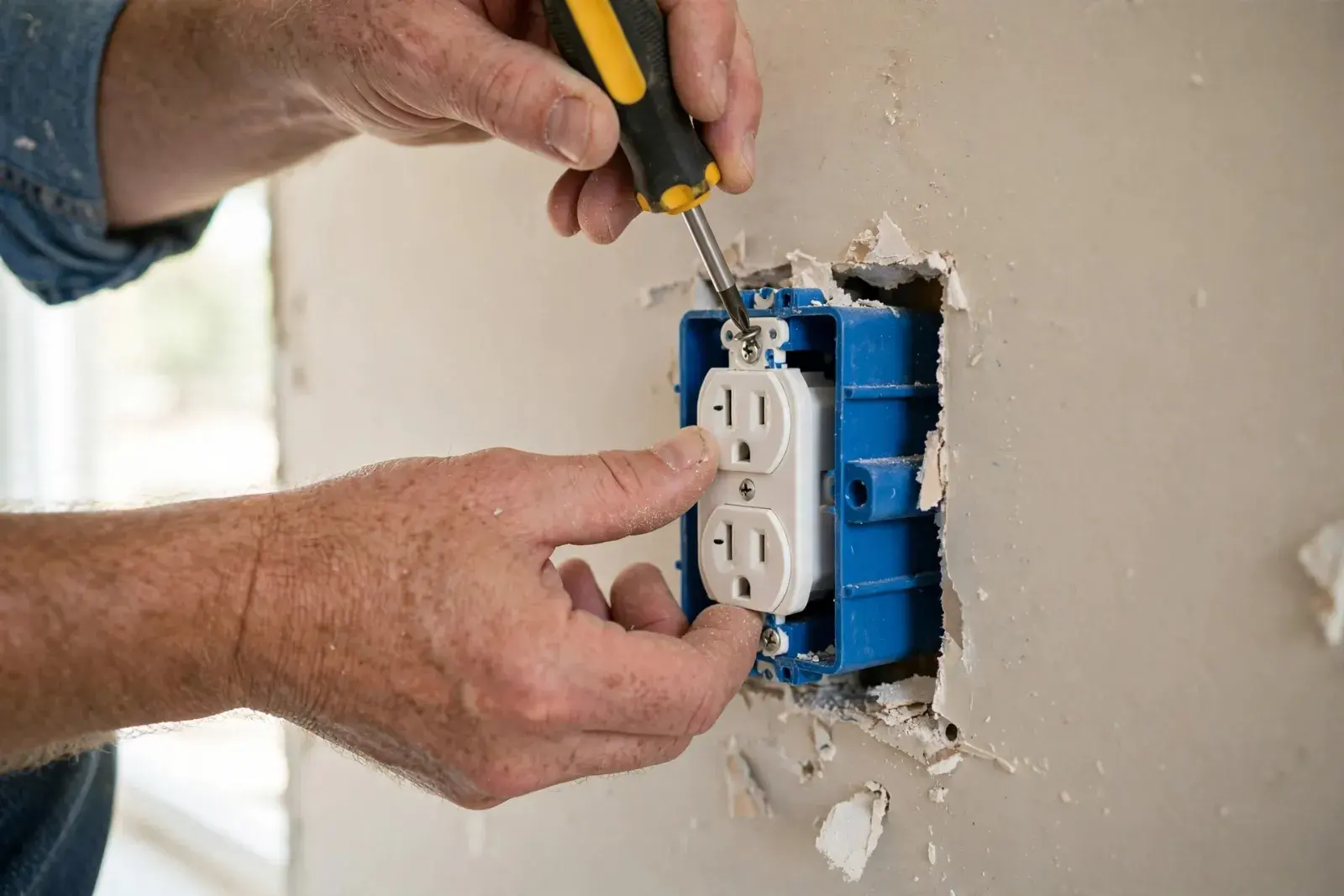
Outlets and switches are the parts of the wiring you touch every day, and they wear. A replacement is a small job. Adding one where none exists is a wiring job, because the new outlet needs a cable route and a circuit with room for it.
Call availability varies by area and time of day. Calls are routed to an independent electrical contractor. Reviewed .
When an outlet or switch should be replaced
Plugs fall out or sit loose
Worn contacts grip poorly, and a poor grip makes heat.
Cracked or broken faces
Exposes live parts.
Warmth, discoloration or a hot-plastic smell
Stop using it now. See electrical burning smell.
Sparks beyond a brief blue snap
See sparking outlet.
Switches that crackle, stick or need jiggling
The contacts are arcing inside.
Painted-over devices
Paint in the slots stops plugs seating fully.
Legal fixes for two-prong outlets
Fitting a three-prong outlet on a circuit with no ground, with nothing else done, is a code violation and misleads everyone who uses it.
| Option | Result | Limits |
|---|---|---|
| Run a new grounded circuit | A true equipment ground | The most work. See house rewiring. |
| Add a ground wire to the existing box | A true equipment ground | Permitted when routed to an approved grounding point; access decides feasibility. |
| GFCI protection, labeled No Equipment Ground | Shock protection and a legal three-prong outlet | No ground for surge protectors or equipment that needs one. |
| Replace with a new two-prong outlet | A sound device | Still accepts only two-prong plugs. |
What adding an outlet involves
A new outlet is fed either by extending a nearby circuit or by a new circuit from the panel. Extending is quicker, but only if the existing circuit has capacity and is a type that may legally be extended. Kitchen counter, bathroom and laundry circuits have their own rules about what else they may serve.
New outlets in a dwelling must be tamper-resistant, and depending on location and the code edition in force they may also need GFCI protection, AFCI protection or a weather-resistant rating outdoors. Extending a circuit can require AFCI protection to be added to that circuit.
For a television mounted on the wall, a floor outlet or an outlet on a kitchen island, the electrician will look at the route first. The outlet itself is the easy part.
Device choices worth knowing about
- Tamper-resistant outlets
- Internal shutters that open only when both slots are pressed together. Required in new residential work.
- Dimmers
- Must be rated for the type and total wattage of the lamps. LED lamps need an LED-rated dimmer or they flicker and buzz.
- Smart switches
- Many need a neutral wire in the switch box, which older houses often lack.
- USB outlets
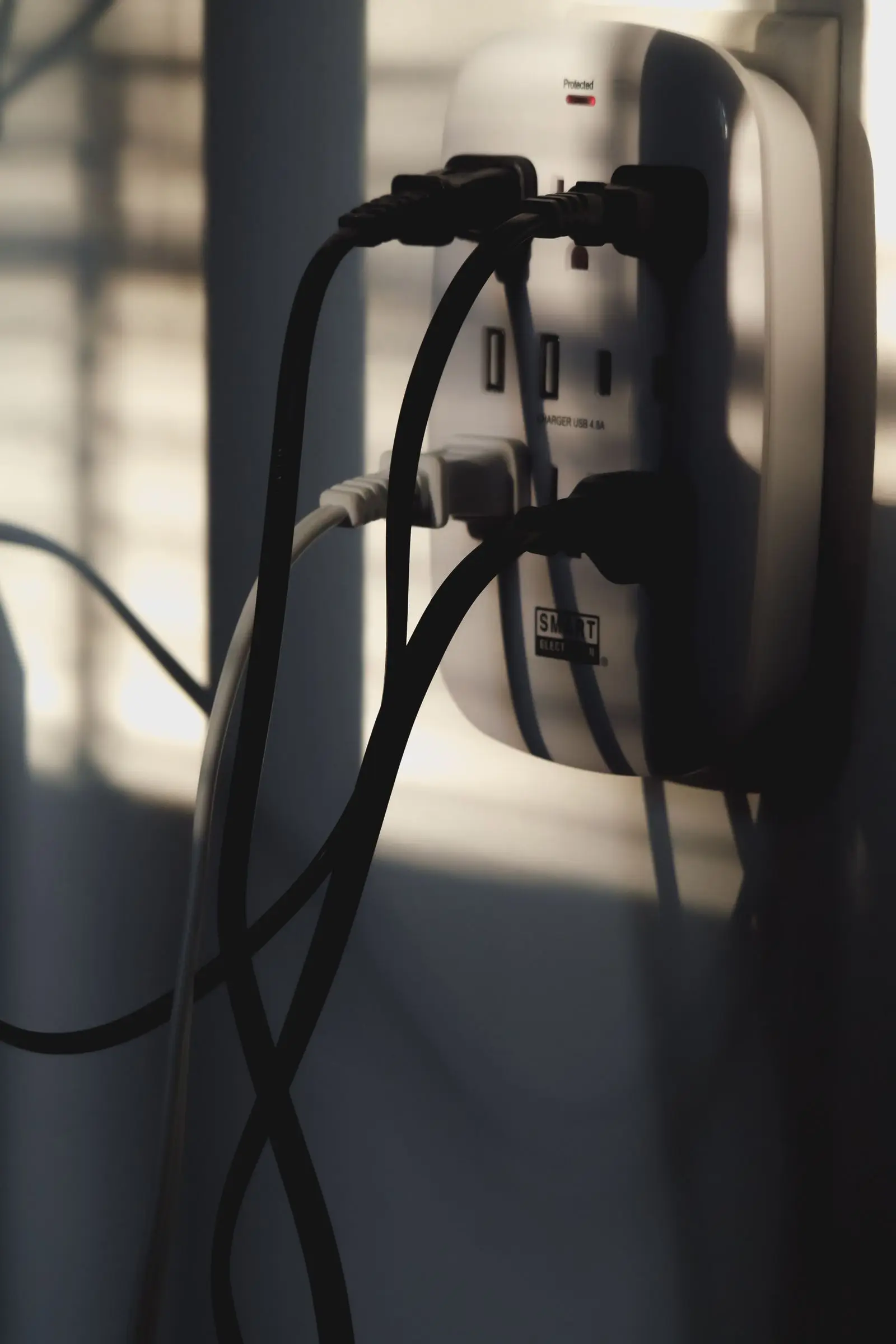
- Convenient, but the electronics inside age faster than a plain outlet.
- Three-way and four-way switches
- Control one light from two or more places. Adding a location means new cable between the switches.
- Commercial or specification grade
- Heavier contacts for outlets that see daily plugging and unplugging.
What is reasonable to do yourself
Local rules on homeowner electrical work differ. See the permit guide.
- Plan it
Replacing a cover plate
A homeowner task. Switch the circuit off first if the plate is metal or the device is damaged.
- Plan it
A like-for-like outlet or switch on copper wiring, where local rules allow
Possible for a careful person with the breaker off and the circuit tested dead. Use the screw terminals, not the push-in holes.
- This week
Aluminum wiring, no ground, scorched wires, or more wires than expected in the box
Stop and call an electrician.
- Plan it
Any new outlet, new circuit or relocated device
Electrician and, in most places, a permit.
Outlet and switch terms explained
- Receptacle
- The trade name for an outlet. A duplex receptacle has two places to plug in.
- Tamper-resistant
- An outlet with internal shutters that block single objects. Marked TR.
- Three-way switch
- A switch that controls one light from two locations, used in pairs.
- Neutral
- The white conductor that completes the circuit. Many smart switches need one in the switch box.
What to work out before adding outlets or switches
Exact locations
Mark where each new outlet or switch should go, and at what height.
What will be plugged in
A television, a freezer and a space heater have very different demands.
What is on the other side of the wall
An outlet back-to-back with an existing one is the easiest addition.
The device style you want
Standard, decorator, USB, smart or dimmer, and the color.
Outlet and switch questions
Why is one outlet controlled by a wall switch?
It was wired as a switched outlet for a lamp, common in rooms without a ceiling light. It can be converted to always-on, or half-switched.
How many outlets can be on one circuit?
For general household circuits the code sets no fixed number. The practical limit is the load, which is why kitchens and workshops need more circuits than bedrooms.
Why does my dimmer feel warm?
Dimmers shed a little heat through the plate, which is normal. Hot to the touch, or a dimmer running more wattage than its rating, is not.
How much does it cost to add an outlet?
It depends mainly on how far the new outlet is from a suitable circuit and how hard the wall is to fish. Ask for a price that states whether patching is included.
How long do outlets last?
Many last decades with light use. Heavily used outlets wear faster. Replace any that no longer grip a plug firmly.
Can an outlet be added to an exterior wall or outdoors?
Yes. Outdoor outlets need a weather-resistant device, an in-use cover and GFCI protection. See GFCI outlet installation.
Do I need an electrician to install a smart switch?
A like-for-like swap is within reach of a careful person where local rules allow, but many smart switches need a neutral wire that older boxes lack.
Can a fan be added where there is only a switch and an outlet?
Yes, with a new fan-rated ceiling box and cable from the switch. See ceiling fan installation.
Talk to an electrician about outlet & switch installation
Call to be connected with an independent electrical contractor near you, or leave your number and one will call back.
(888) 555-0167Call availability varies by area and time of day
Breakerwick is a referral service. Your call or request goes to an independent electrical contractor that sets its own prices and schedule. Ask for the license number, proof of insurance and a written scope before work starts. How this works
Request a callback
Leave a number and an electrical contractor in your area will call you.