
Cost guide
EV charger installation cost
Updated · Breakerwick editorial
Short answer
Consumer guides put a typical Level 2 home installation between roughly $1,000 and $3,000 including the charger, with simple garage installations below that and jobs needing panel work well above. Distance from the panel and spare electrical capacity decide most of it.
What published guides report for EV chargers
| Item | Published figure | Source |
|---|---|---|
| Complete Level 2 installation, typical single-family home | $1,200 to $3,000 | HomeGuide |
| Complete installation, average and typical range | Average $967, typically $564 to $1,400 | Angi |
| Professional installation labor | $400 to $1,200 | Angi |
| Installation work | About $500 to $1,200 | Consumer Reports |
| Level 2 charger unit | $300 to $700 | Consumer Reports |
| Permit | $150 to $200 | Angi |
| Electrical panel upgrade, if needed | $800 to $2,000 | Angi |
Third-party figures checked on October 7, 2026, shown so you can see the spread. Breakerwick does not price work, and none of these is a quote for your garage.
Why the ranges do not agree
Each guide averages a different mix of jobs. A figure near $1,000 describes a charger a few feet from a panel with spare capacity. A figure near $3,000 includes long cable runs and some panel work.
- Low end
- Attached garage, panel on the same wall, spare 240-volt capacity, plug-in or hardwired unit supplied by the owner.
- Middle
- A run of 30 to 60 feet through finished space or along an exterior wall, permit and inspection included.
- High end
- Detached garage with trenching, a full panel needing a subpanel or load management device, or a service upgrade.
What moves the price
- Cable length
- Copper is the main material cost and it scales with distance and circuit size.
- Circuit size
- A 60-amp circuit uses heavier wire and a larger breaker than a 30 or 40-amp one. Most households do not need the largest size; see charging levels.
- Panel capacity
- A load management device usually costs far less than a service upgrade and is often enough.
- Wiring method
- Surface conduit in a garage is quick. Fishing cable through finished walls and ceilings is not.
- Trenching
- Detached garages and driveway pedestals need buried conduit.
- Permit and inspection
- Fees vary by jurisdiction and are sometimes itemized separately.
Ways to keep the cost down
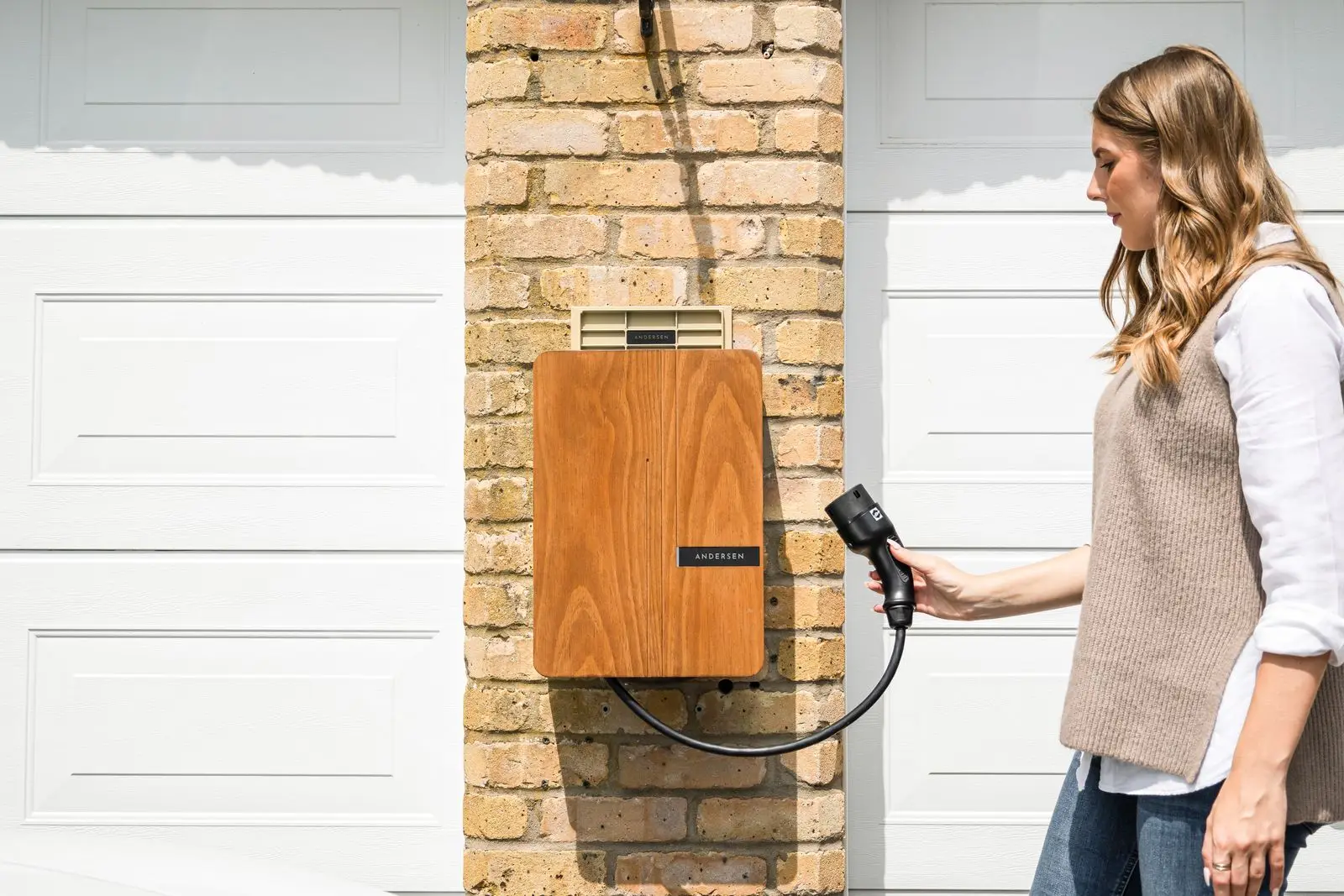
- Mount the charger near the panel
- A longer charging cord is cheaper than a longer circuit.
- Right-size the circuit
- A 32-amp charger on a 40-amp circuit covers most daily driving.
- Ask about load management first
- Before accepting a service upgrade, ask whether a listed energy management device would satisfy the load calculation.
- Check utility programs before you start
- Many utilities offer charger rebates or special EV rates, and some require approval before installation.
- Confirm tax credits independently
- Federal credits for home charging equipment have had location and date limits that changed over time. Confirm the current rules before counting on one.
Sources for the EV charger figures
Figures in the table come from the publishers below and were checked on October 7, 2026. Each publisher updates its page on its own schedule.
EV charger cost questions
Is a 240-volt outlet cheaper than a hardwired charger?
The outlet itself may be, but a proper heavy-duty receptacle and the GFCI protection recent codes require narrow the gap. Hardwiring also avoids a common failure point.
Does the quote include the charger?
Not always. Many electricians price the circuit and installation and leave the unit to the owner. Ask.
Will I need a panel upgrade?
Only if the load calculation says so. Many homes do not, particularly with a smaller circuit or load management.
This guide is general information, not professional, legal or insurance advice. Electrical codes, permit rules and prices vary by location. Have a licensed electrician assess your installation, and confirm requirements with your local permit office.
Want a licensed electrician to look at it?
Call to be connected with an independent electrical contractor in your area, or leave your number for a callback.
(888) 555-0167Call availability varies by area and time of day
Breakerwick is a referral service. Your call or request goes to an independent electrical contractor that sets its own prices and schedule. Ask for the license number, proof of insurance and a written scope before work starts. How this works
Request a callback
Leave a number and an electrical contractor in your area will call you.