
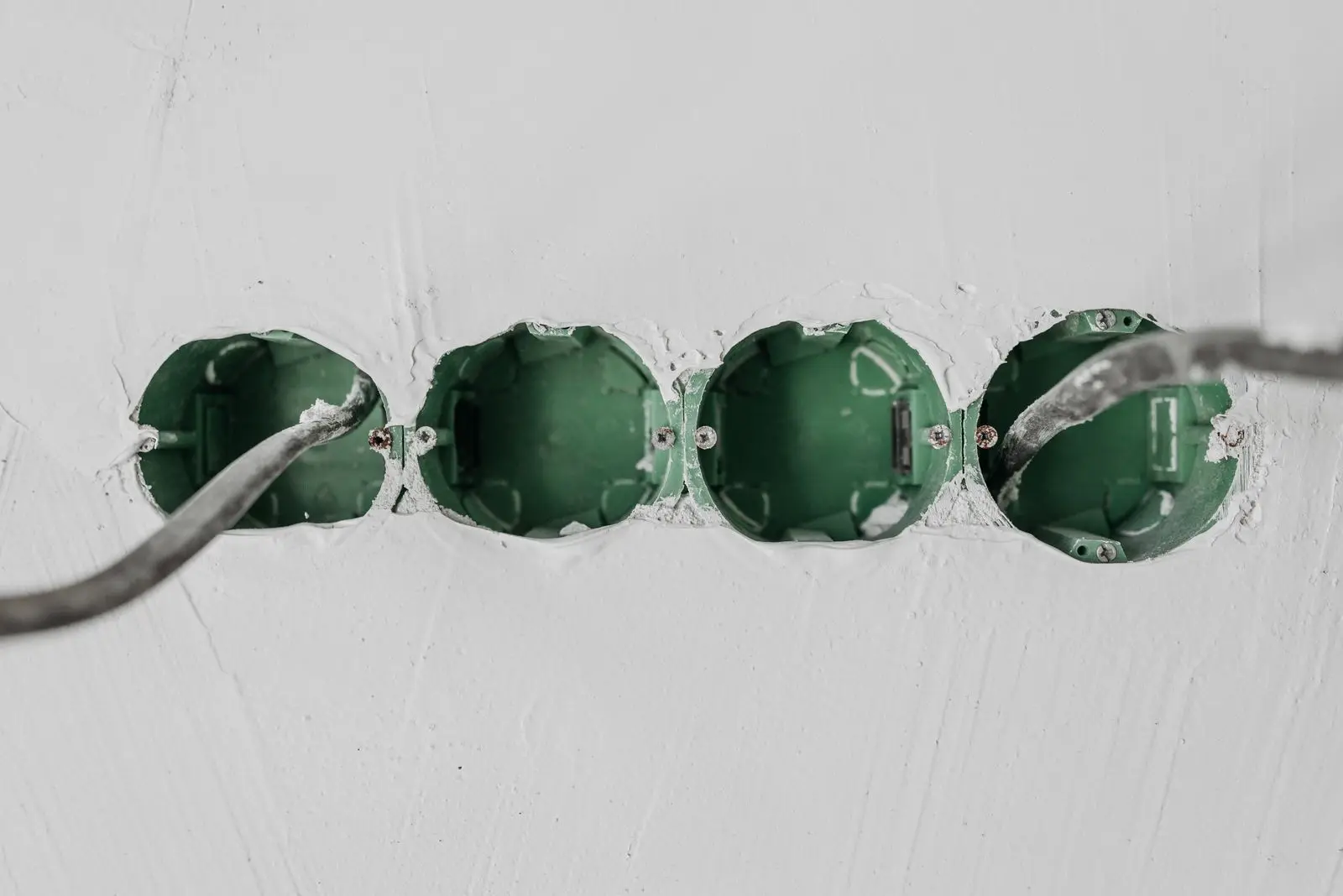
Wiring
Dedicated circuit installation
A dedicated circuit has one breaker, one cable and one appliance. It is the fix when a microwave, space heater, freezer or power tool keeps tripping a shared circuit, and it is required for most fixed appliances.
Call availability varies by area and time of day. Calls are routed to an independent electrical contractor. Reviewed .
Typical circuits by appliance
The appliance nameplate and installation instructions always govern. These are common residential cases.
| Appliance | Typical circuit | Voltage |
|---|---|---|
| Refrigerator, dishwasher, disposal, built-in microwave | 15 or 20 amps each | 120 |
| Kitchen countertop outlets | At least two 20-amp circuits | 120 |
| Bathroom outlets, laundry outlet | 20 amps | 120 |
| Electric dryer | 30 amps | 240 |
| Electric range | 40 or 50 amps | 240 |
| Electric water heater | 30 amps | 240 |
| Central air conditioner or heat pump | Per nameplate, commonly 20 to 60 amps | 240 |
| Hot tub | Commonly 40 to 60 amps with GFCI protection and a disconnect in sight | 240 |
How the wire and breaker are chosen
The breaker protects the wire, and the wire is sized for the load. Both follow from the appliance nameplate.
- Common pairings
- 15 amps on 14-gauge copper, 20 amps on 12-gauge, 30 amps on 10-gauge. Larger circuits are sized from code tables.
- Continuous loads
- Loads that run three hours or more are limited to 80 percent of the circuit rating, which is why a 48-amp EV charger needs a 60-amp circuit.
- Distance
- Long runs may need a larger wire size to limit voltage drop.
- Never upsized alone
- Fitting a bigger breaker to existing wire to stop trips removes the wire's protection.
What running a new circuit involves
Check the panel
A free space and spare capacity are confirmed. A full panel may need a subpanel.
Choose the route
Through the basement, crawl space or attic where possible. Finished walls between the panel and the appliance add time.
Permit
New circuits need a permit in most jurisdictions. See the permit guide.
Install
Cable, box, receptacle or hard-wired connection, and the breaker. GFCI or AFCI protection is added where the local code calls for it.
Test and label
The circuit is tested under load and written on the panel schedule.
Signs an appliance needs its own circuit
The breaker trips when two things run together
Microwave plus toaster, or a space heater plus anything. See breaker keeps tripping.
Lights dim when it starts
A motor load sharing a lighting circuit.
It runs from an extension cord
Freezers, window air conditioners and heaters on extension cords are a common cause of overheated outlets.
The manual says so
Installation instructions that call for an individual branch circuit are part of the appliance's listing.
240-volt outlets are not all the same
A 240-volt receptacle is shaped for its amp rating and for whether it carries a neutral. Dryers and ranges installed since the mid 1990s use four-prong outlets with a separate ground; older three-prong outlets may remain in existing installations but are not installed new. Welders, compressors and some EV charging cords use other patterns again.
Tell the electrician the exact appliance, or send a photo of its plug and nameplate, before the visit. It decides the cable, the breaker and the receptacle.
Circuit terms explained
- Dedicated circuit
- A circuit that serves one appliance and nothing else. The code calls it an individual branch circuit.
- Gauge
- Wire thickness. A lower number is a thicker wire: 12-gauge is heavier than 14-gauge.
- Two-pole breaker
- A double-width breaker that connects to both hot legs to supply 240 volts.
- Nameplate
- The label on an appliance stating its voltage, amps and required circuit.
What to have ready before a new-circuit quote
The appliance model
Or a photo of its nameplate and plug.
Its location
And how far that is from the panel.
A photo of the panel
Door open, showing free spaces.
Dedicated circuit questions
Can two appliances share a dedicated circuit?
By definition, no. Some codes allow specific pairings, such as a disposal and dishwasher on one circuit sized for both, but the installation instructions decide.
How long does a new circuit take?
A circuit with an easy route from the panel is often done in a few hours. Long routes through finished space take longer.
Do I need a 240-volt circuit for a window air conditioner?
Only for large units. The plug shape and the nameplate show what the unit requires.
Which appliances need a dedicated circuit?
Most fixed appliances: refrigerator, dishwasher, disposal, built-in microwave, range, dryer, water heater, furnace, air conditioner and EV charger. The installation instructions state it.
What does a new circuit cost?
Distance from the panel and the difficulty of the route decide most of it. Ask for a price that states the cable size, breaker type and permit.
Can a 120-volt outlet be converted to 240 volts?
Only if the cable serves that outlet alone and is the right size. Usually a new cable is run.
Does extreme heat change circuit sizing?
Yes. Cable in a very hot attic may carry less current than its normal rating. See electricians in Phoenix.
Talk to an electrician about dedicated circuit installation
Call to be connected with an independent electrical contractor near you, or leave your number and one will call back.
(888) 555-0167Call availability varies by area and time of day
Breakerwick is a referral service. Your call or request goes to an independent electrical contractor that sets its own prices and schedule. Ask for the license number, proof of insurance and a written scope before work starts. How this works
Request a callback
Leave a number and an electrical contractor in your area will call you.