
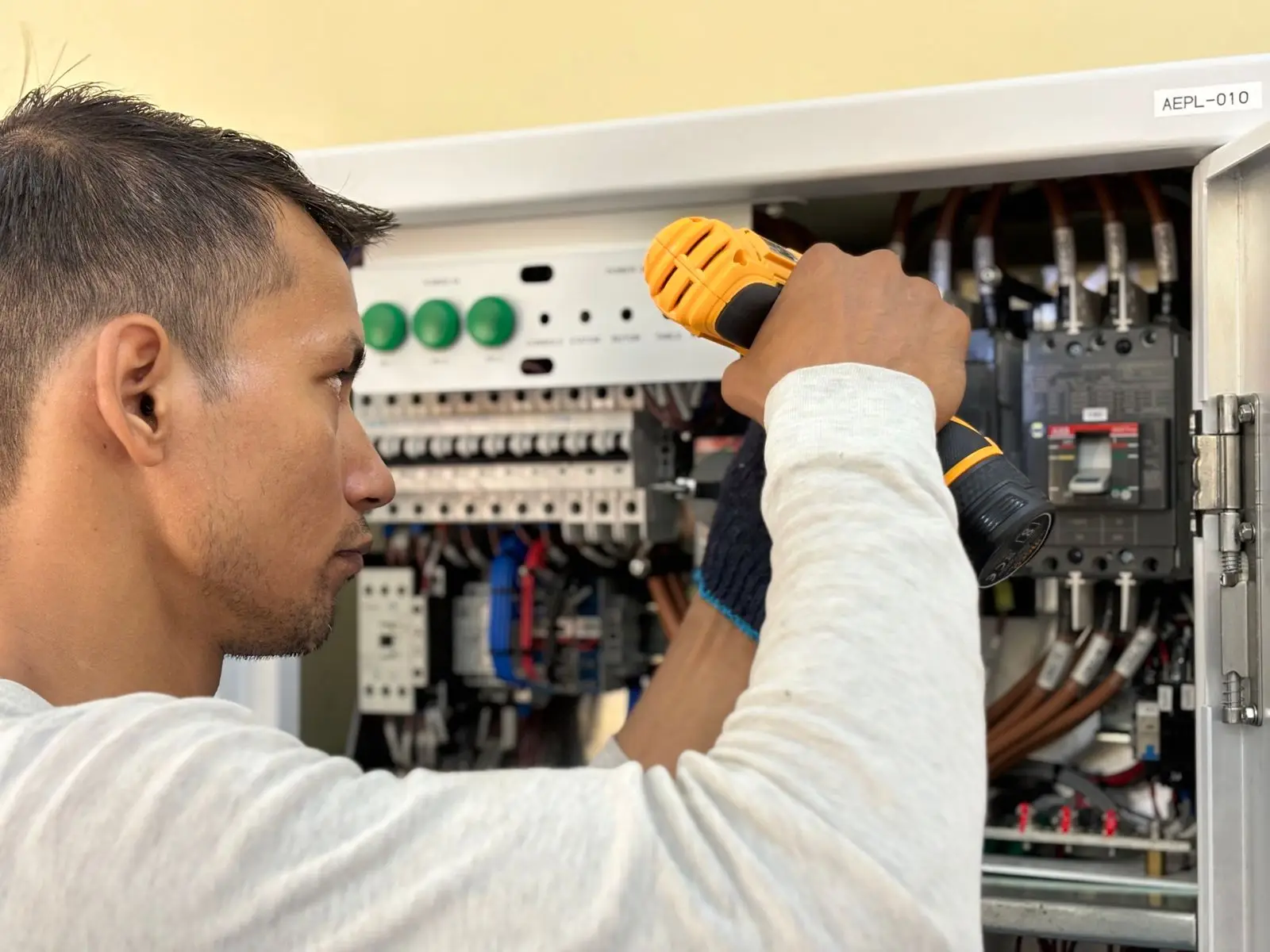
Panels and service
Circuit breaker replacement
Breakers do wear out, but less often than people assume. A breaker that trips is usually reporting a real problem on the circuit. Replacement is the right repair when the breaker is damaged, will not reset with the circuit disconnected, or is the wrong type for the panel.
Call availability varies by area and time of day. Calls are routed to an independent electrical contractor. Reviewed .
Is it the breaker or the circuit?
An electrician separates the two by measuring the current on the circuit and by testing the breaker with the circuit wire removed. A breaker that trips at well under its rating, or will not latch with nothing connected, has failed.
- Points to the circuit
- Trips when a particular appliance runs, trips after several minutes of heavy use, or trips the instant it is reset with everything plugged in.
- Points to the breaker
- A loose or floppy handle, visible scorching, a breaker hot to the touch under a light load, or no power on the circuit although the handle is on.
- Points to the panel
- Several breakers affected, discoloration on the bus bar behind the breaker, or a breaker that does not seat firmly. See panel upgrades.
Why the replacement has to match the panel
Breakers are not interchangeable between brands, even when they physically fit. A panel is tested and listed with specific breaker types, which are printed on the label inside the door. A breaker of another type may sit loosely on the bus, and a loose connection there overheats.
The amp rating must also match the wire on the circuit, not the load you would like to run. A 15-amp circuit wired in 14-gauge copper cannot be given a 20-amp breaker to stop nuisance trips. That removes the protection the wire depends on. If the circuit is too small for what is plugged in, the fix is a dedicated circuit.
For obsolete panels, replacement breakers may be available only as used stock or third-party copies. That is usually the point at which replacing the panel makes more sense than repairing it.
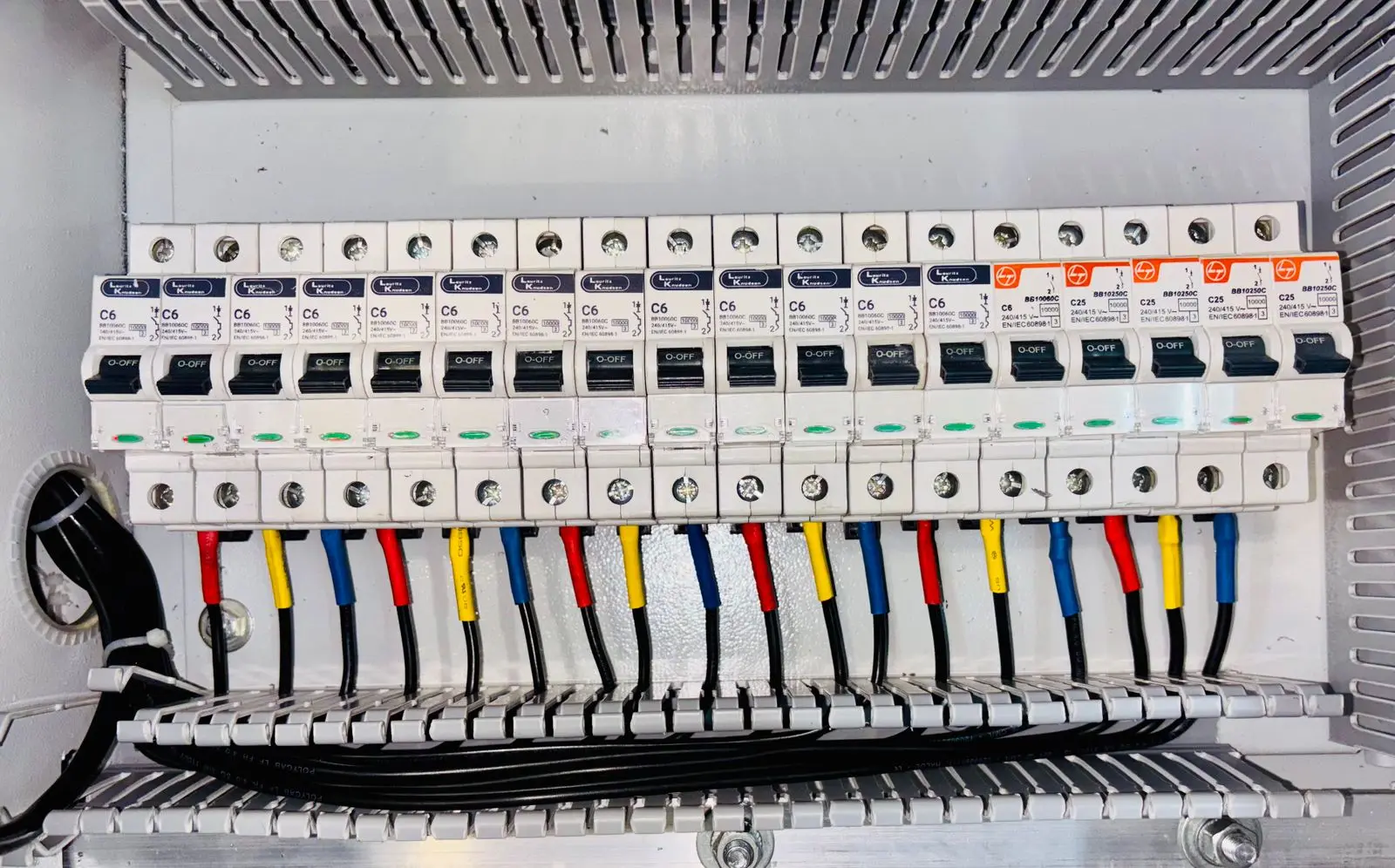
Breaker types and what each protects against
| Type | Trips on | Typical use |
|---|---|---|
| Standard | Overload and short circuit | General circuits in older installations |
| GFCI | Current leaking to ground, as little as about 5 milliamps | Circuits serving wet areas, where outlet-type GFCIs are not practical |
| AFCI | Arcing from damaged cable or loose connections | Bedroom and living-area circuits in homes wired under recent codes |
| Dual function | Both arc faults and ground faults | Kitchens and laundry areas under recent codes |
| Two-pole | Overload or fault on either leg of a 240-volt circuit | Ranges, dryers, water heaters, air conditioners, EV chargers |
Where AFCI and GFCI protection is required depends on the code edition your jurisdiction has adopted.
What the electrician does
Test under load
A clamp meter shows what the circuit is really drawing.
Inspect the bus
With the breaker out, the bus stab is checked for pitting or discoloration. Damage here means a new breaker will fail the same way.
Fit the listed type
The replacement matches the panel listing and the wire size, and the terminal is tightened to the marked torque.
Retest
The circuit is energized and checked under load. AFCI and GFCI breakers are tested with their test button.
Why this is not a casual DIY job
Parts of the panel stay live
Switching the main breaker off does not de-energize the service conductors and lugs feeding it.
A wrong-type breaker can look fine
It may work for months before the loose bus connection overheats.
Local rules differ
Some jurisdictions let homeowners work in their own panel with a permit; others require a licensed electrician. See the permit guide.
Breaker terms explained
- Trip
- The breaker opening the circuit by itself because it sensed an overload or a fault.
- Amp rating
- The current a breaker carries before it trips, printed on the handle: 15, 20, 30 and so on.
- Tandem breaker
- Two narrow breakers in one slot. Allowed only in the positions the panel label permits.
- Listed
- Tested by a recognized laboratory for use in that specific panel.
What to note before a breaker visit
The panel brand and model
A photo of the label inside the door is enough.
Which breaker and what it feeds
And whether its handle feels loose or warm.
The pattern
Trips at once, after a while, or only with one appliance.
Breaker replacement questions
How long do breakers last?
Often several decades. Life is shortened by frequent tripping, heat, moisture and being used as a daily switch.
Why does my new AFCI breaker trip when the old one did not?
AFCI breakers detect arcing that standard breakers ignore. A trip can point to a damaged cord, a loose connection or shared neutrals between circuits, all of which are worth finding.
Can a breaker fail without tripping?
Yes. A breaker can stick closed and fail to trip on overload. This failure mode is the main concern with some older panel brands.
How do I know if a breaker is bad?
A loose handle, scorching, heat under a light load, or no power with the handle on all point to the breaker. An electrician confirms it by testing with the circuit wire removed.
Can I replace a breaker with a bigger one?
No. The breaker is sized to the wire. A larger breaker lets the wire overheat before anything trips.
Is it normal for a breaker to feel warm?
Slightly warm under a heavy load can be normal. Hot to the touch, or warm with little running, should be checked.
What if replacement breakers are no longer made for my panel?
That usually means the panel is obsolete, and replacing it is the sound repair. See electrical panel upgrade.
Talk to an electrician about circuit breaker replacement
Call to be connected with an independent electrical contractor near you, or leave your number and one will call back.
(888) 555-0167Call availability varies by area and time of day
Breakerwick is a referral service. Your call or request goes to an independent electrical contractor that sets its own prices and schedule. Ask for the license number, proof of insurance and a written scope before work starts. How this works
Request a callback
Leave a number and an electrical contractor in your area will call you.