
Wiring
House rewiring
Wiring does not expire on a date. It needs replacing when its insulation has broken down, when it has no ground and the house now depends on one, or when it can no longer carry the load. Many homes need only part of the wiring replaced.
Call availability varies by area and time of day. Calls are routed to an independent electrical contractor. Reviewed .
Wiring types by era and what each means
Dates are approximate and regional. Houses are often a mix, because each renovation used the method of its day.
| Wiring | Roughly | What to know |
|---|---|---|
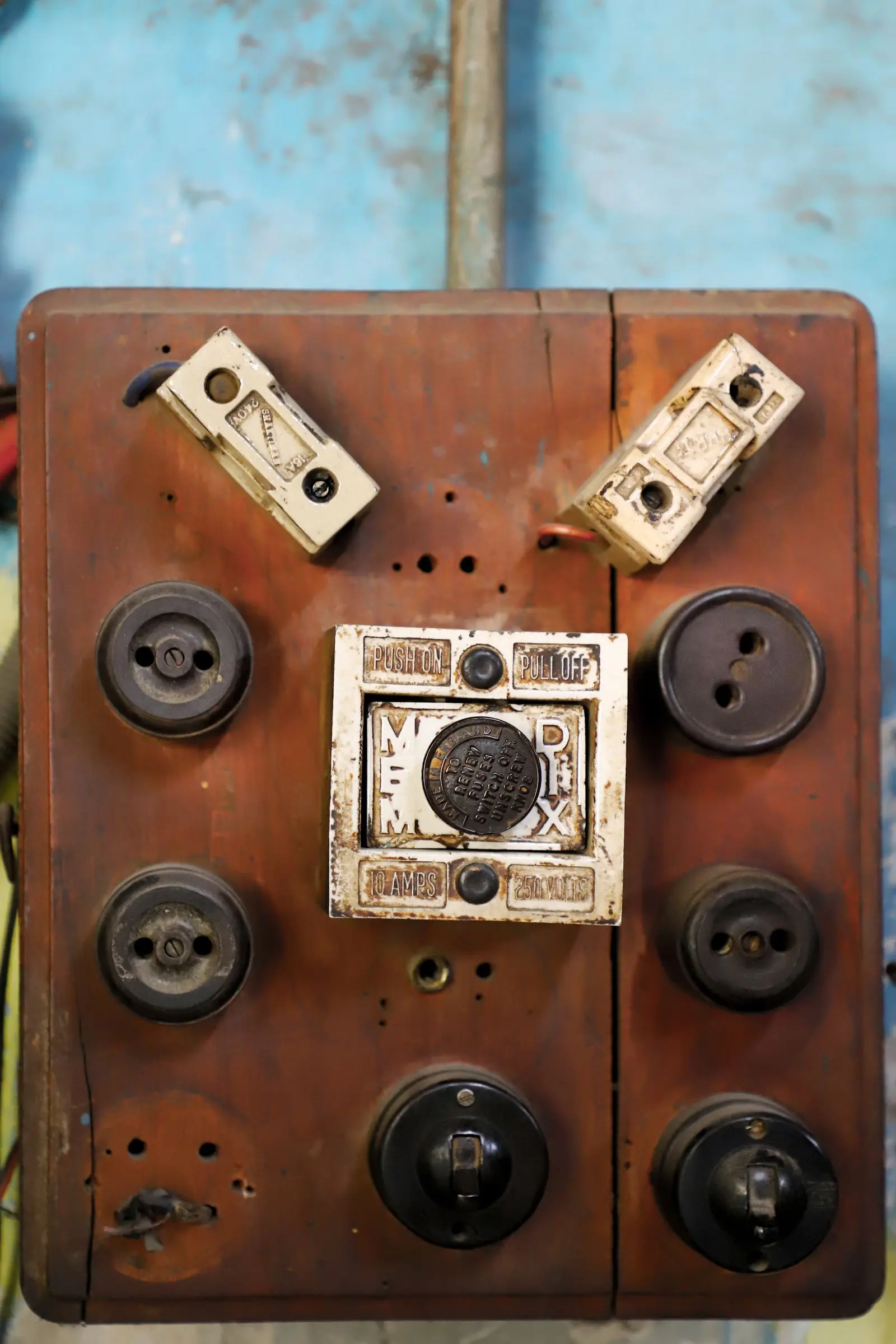
| Knob-and-tube | 1880s to 1940s | No ground, air-cooled, insulation brittle with age. See knob-and-tube replacement. |
| Cloth or rubber-insulated cable | 1920s to 1960s | Insulation crumbles when disturbed, especially at light fixtures where heat has aged it. |
| Two-wire plastic cable, no ground | 1950s to mid 1960s | Sound insulation but ungrounded. Limits where three-prong outlets can be used. |
| Aluminum branch wiring | About 1965 to 1973 | Connections loosen and overheat. See aluminum wiring repair. |
| Grounded copper cable | Late 1960s onward | The current standard. Usually replaced only where damaged or undersized. |
Signs the wiring itself is the problem
Insulation that cracks or flakes when a device is pulled out
The conductors behind every other device are likely the same.
Mostly two-prong outlets
The circuits have no equipment ground.
Frequent trips or blown fuses with ordinary use
Too few circuits for a modern household.
Scorched devices in more than one room
A pattern, not a one-off repair.
An insurer's letter
Insurers may decline or surcharge homes with knob-and-tube or aluminum branch wiring until it is addressed.
Whole-house or partial rewire
Partial rewire
- Replaces the worst circuits or adds new grounded circuits for kitchens, baths and laundry
- Can be staged room by room alongside other renovation
- Leaves sound older wiring in service
Whole-house rewire
- Every branch circuit replaced back to a new or existing panel
- Usually paired with a panel upgrade
- Clears insurance and resale objections in one project
An electrical inspection is the usual way to decide which the house needs.
How a rewire is carried out in a finished house
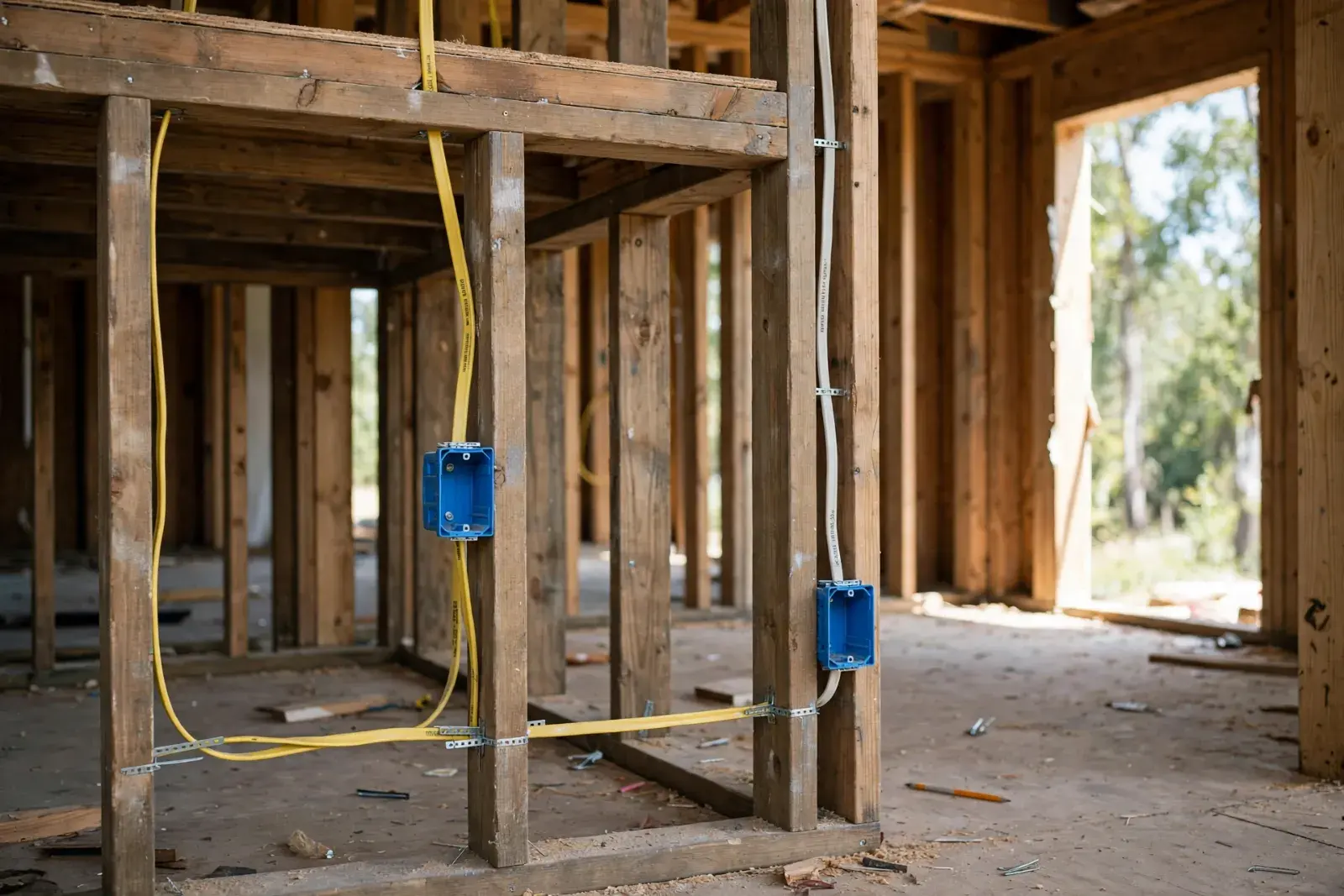
Electricians fish new cable through walls and ceilings and cut access holes only where framing blocks the route.
Survey and circuit plan
Each room's outlets, switches, lights and appliances are mapped to new circuits, and the load is calculated.
Permit
Rewiring is permitted work everywhere. The permit normally sets a rough-in inspection and a final.
Rough-in
New cable and boxes go in. Attics, basements and crawl spaces are used as the main routes, with access holes in walls and ceilings where needed.
Rough inspection
The inspector sees the cable and boxes before anything is closed up.
Devices and panel
Outlets, switches and fixtures are installed and each circuit is terminated and labeled at the panel.
Final inspection and patching
After the final, holes are patched. Drywall and paint repair is often a separate trade; ask who is doing it.
What makes a rewire larger or smaller
Published price ranges are in the house rewiring cost guide.
- Access
- An open basement and attic make most of a single-story house reachable. Slab floors and flat roofs do not.
- Wall construction
- Plaster on lath, brick and block walls are slower to fish and to patch than drywall.
- Occupancy
- Rewiring around a household takes longer than rewiring an empty house, and power is restored each evening.
- Hazardous materials
- Asbestos insulation or lead paint in the work area changes how and by whom the openings can be made.
- Upgrades added along the way
- More outlets, new lighting and dedicated circuits are cheapest to add while the walls are open.
Rewiring terms explained
- Branch circuit
- The wiring from one breaker to the outlets, lights or appliance it serves.
- Rough-in
- Installing cable and boxes before walls are closed and devices fitted.
- Fishing
- Pulling new cable through finished walls and ceilings without removing them.
- Equipment ground
- The bare or green conductor that carries fault current back to the panel so the breaker trips.
What to decide before a rewire is quoted
Where you want outlets and switches
Walk each room and mark additions. They cost least while the work is under way.
Lighting changes
New ceiling lights or recessed lighting are far easier to add now.
Whether you will live in the house
It affects the schedule and how the work is staged.
Who repairs the finishes
Plaster, drywall and paint are often a separate trade.
House rewiring questions
Can I stay in the house during a rewire?
Usually. Work proceeds a section at a time and power is restored to the rest of the house at the end of each day. Expect dust and some rooms out of use.
How long does a rewire take?
From several days for a small, accessible house to several weeks for a large or plaster-walled one, plus inspection scheduling.
Will the walls be torn out?
Not as a rule. Expect a number of small access holes. Full removal of wall finishes is only typical when the house is being gutted anyway.
Is old wiring illegal?
No. Wiring that met the rules when installed can normally remain. It becomes a problem when it is unsafe, when it is altered, or when an insurer will not cover it.
How do I know if my house needs rewiring?
Signs include crumbling insulation at devices, mostly two-prong outlets, frequent trips with ordinary use, scorch marks in several places, or an insurer's objection to the wiring type.
Does a rewire include a new panel?
Usually. An old panel rarely has the spaces or the breaker types a new set of circuits needs. See electrical panel upgrade.
Does rewiring add value to a house?
It removes an objection that buyers, lenders and insurers raise on older homes. Whether the price rises by the cost of the work depends on the local market.
Can rewiring be done one floor at a time?
Yes. Staging by floor or by circuit is common, and each stage is inspected.
What does rewiring cost?
Published ranges and what drives them are in the house rewiring cost guide.
Talk to an electrician about house rewiring
Call to be connected with an independent electrical contractor near you, or leave your number and one will call back.
(888) 555-0167Call availability varies by area and time of day
Breakerwick is a referral service. Your call or request goes to an independent electrical contractor that sets its own prices and schedule. Ask for the license number, proof of insurance and a written scope before work starts. How this works
Request a callback
Leave a number and an electrical contractor in your area will call you.