
Smoke, flames, someone shocked or a power line down? Call 911 first and stay at least 35 feet from any downed wire.
Urgent electrical problem
Half the house has no power
If one or two rooms are dead, start with the breakers and GFCIs. If roughly half of everything is dead, 240-volt appliances will not run, or some lights are dim while others are unusually bright, the house has probably lost one leg of its service or its neutral. That is a call to the utility first.
Call availability varies by area and time of day. Calls are routed to an independent electrical contractor. Reviewed .
Work out which kind of outage it is
- This week
One room or one group of outlets is dead
Check breakers and GFCI resets. See outlet not working.
- Act now
About half the circuits are dead and the range, dryer or water heater will not work
One service leg is lost. Call the utility's outage line.
- Act now
Lights are dim in some rooms and very bright in others, or change when appliances start
The neutral is failing. Switch off the main breaker if it is safe to reach and call the utility's emergency line.
- Act now
The whole house is dead but neighbors have power
Check the main breaker. If it is on, call the utility.
Why exactly half goes out
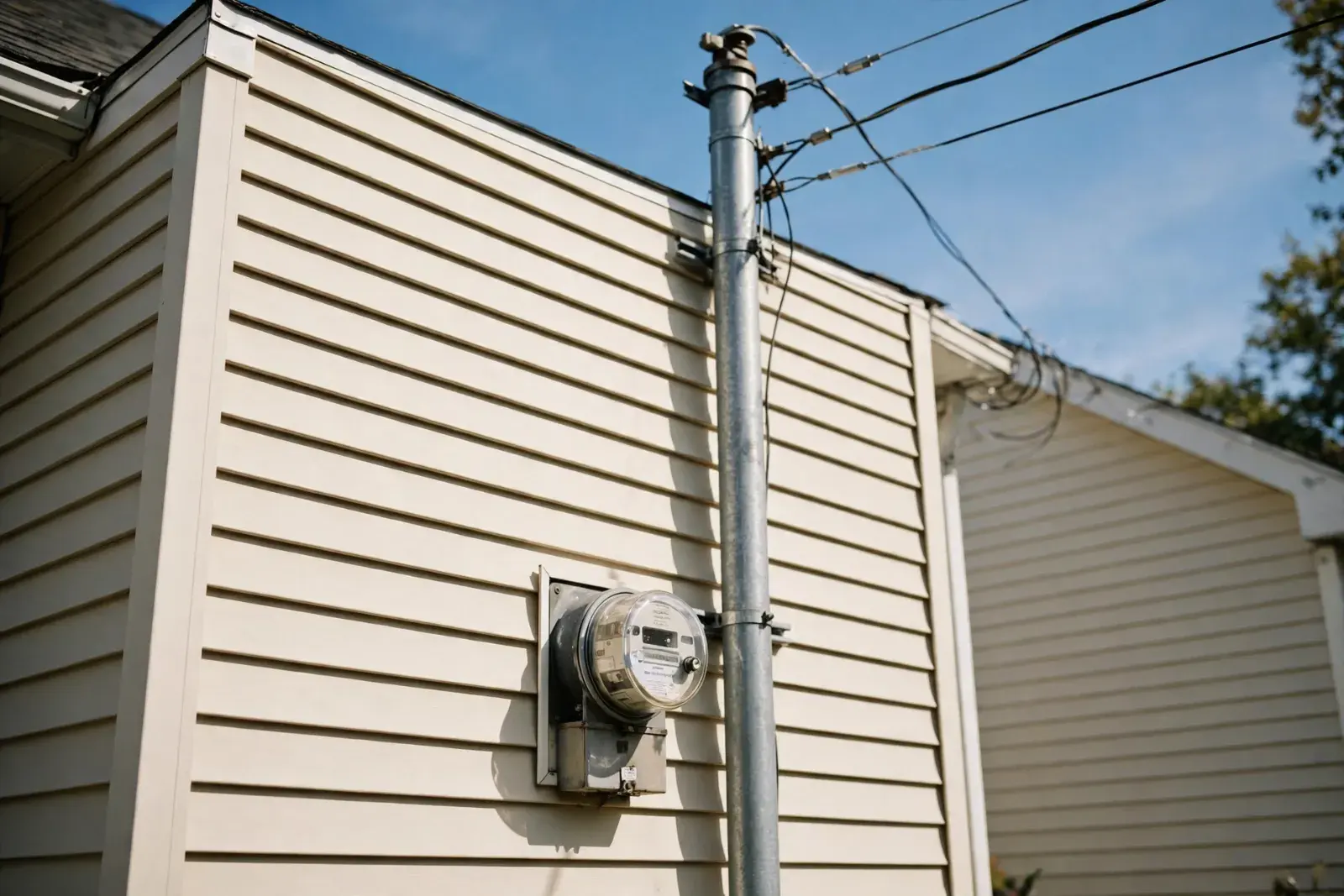
A typical U.S. house is supplied by two hot conductors and a neutral. Each hot leg is 120 volts to neutral, and the two together give 240 volts. The breakers in the panel alternate between the two legs, so about half the 120-volt circuits are on each.
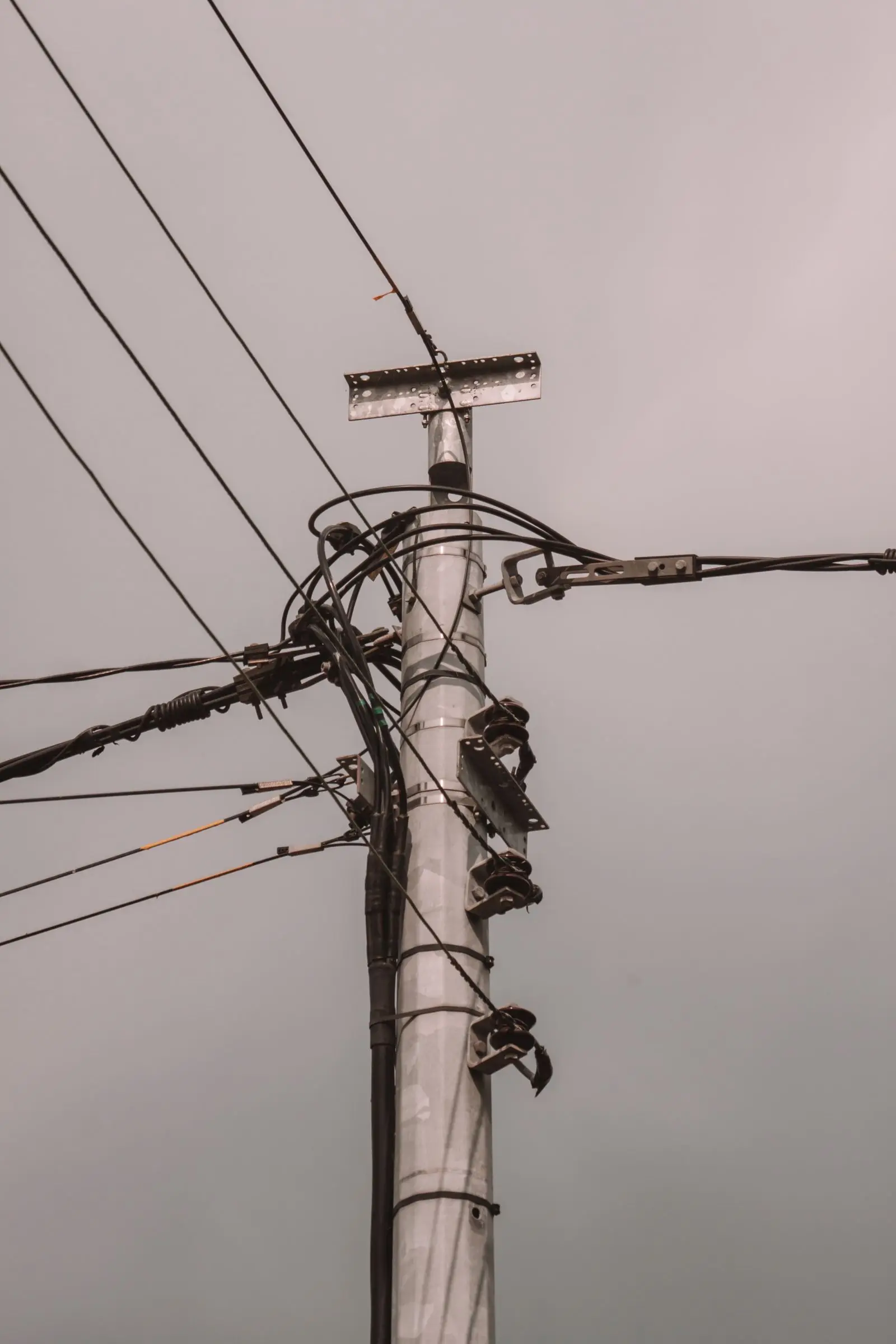
If one leg is lost, through a failed connection at the pole, the service drop, the meter or the main breaker, half the 120-volt circuits go dead and 240-volt appliances stop or run feebly. Oddly, switching on a 240-volt appliance can make some dead circuits come back dimly. That is current passing through the appliance from the good leg, and it is a sign of the problem, not a cure.
Why a failing neutral is the dangerous version
Voltage is no longer shared evenly
One leg can rise well above 120 volts while the other sags. Electronics, lamps and appliance controls on the high side can be destroyed.
Current looks for other paths
It can return through the grounding system, metal water pipes and cable or phone lines, heating them and energizing metal that should be safe.
It comes and goes
Wind, temperature and load all affect a loose connection, so the symptoms may vanish before anyone arrives. Report it anyway.
Who repairs which part
The dividing line varies by utility. This is the usual arrangement for an overhead service.
- Utility
- The transformer, the service drop to the house, the connections at the top of the mast and the meter itself.
- Homeowner, through an electrician
- The mast and weatherhead, the service entrance cable, the meter socket in many service areas, the main breaker and the panel.
- Order of work
- The utility checks its side first and tells you if the fault is on yours. If so, an electrician repairs it and in most places an inspection is needed before reconnection.
- Underground services
- A failed buried conductor may belong to the utility or to the owner, depending on the utility's rules. Ask when you report it.
Partial outage questions
Will the utility charge me to come out?
Utilities generally check their own equipment without charge. Policies vary, so ask when you call.
Should I keep using the half that works?
If a service leg is simply lost, the working circuits are usable with care. If lights are bright in places, or you are unsure, switch the main off and wait.
Could it be the main breaker?
Yes. A main breaker can fail on one pole. An electrician can test it once the utility has confirmed its supply is good.
This page is general safety information, not a diagnosis. Electrical faults can cause fire and electric shock. If you are unsure whether something is safe, switch it off and have a licensed electrician inspect it.
Want it checked today?
Call to be connected with an independent electrical contractor in your area, or leave your number for a callback.
(888) 555-0167Call availability varies by area and time of day
Breakerwick is a referral service. Your call or request goes to an independent electrical contractor that sets its own prices and schedule. Ask for the license number, proof of insurance and a written scope before work starts. How this works
Request a callback
Leave a number and an electrical contractor in your area will call you.