
Troubleshooting and repair
Electrical repair
Most home electrical faults come down to one of four things: a loose connection, an overloaded circuit, a worn device or damaged cable. An electrician finds which one by testing, not guessing, and the repair is often small once the cause is known.
Call availability varies by area and time of day. Calls are routed to an independent electrical contractor. Reviewed .
What an electrical repair visit covers
A repair visit is a diagnosis first and a fix second. The electrician reproduces the symptom, tests the circuit from the panel outward, and repairs or replaces the part that failed.
- Devices
- Outlets, switches, dimmers, GFCI and AFCI devices that are worn, cracked, scorched or no longer hold a plug.
- Connections
- Loose terminals, failed wire connectors and back-stabbed outlets, which cause most intermittent faults and most heat damage.
- Circuits
- Breakers that trip, circuits that are overloaded, and cable damaged by nails, rodents, water or age.
- Fixtures
- Lights and fans that hum, flicker or stopped working. Replacing or adding a fixture is covered under lighting installation.
Common symptoms and what usually causes them
Each symptom has its own page with what to check safely before you call.
| Symptom | Usual causes | Read more |
|---|---|---|
| Breaker trips again after reset | Overload, short circuit, ground fault, or a failing breaker | Breaker keeps tripping |
| One outlet or a group of outlets is dead | Tripped GFCI upstream, loose connection, tripped breaker | Outlet not working |
| Lights flicker or dim | Loose connection, shared circuit with a large motor, utility-side problem | Flickering lights |
| Burning or fishy smell | Overheating device or connection | Burning smell |
| Panel hums or crackles | Loose breaker, arcing at the bus, overloaded breaker | Buzzing panel |
| Half the house lost power | One leg of the service is down, or a main breaker fault | Partial power outage |
How the diagnosis is done
Describe and reproduce
You explain what happens and when. If the fault is intermittent, note which appliances were running; that detail often shortens the search.
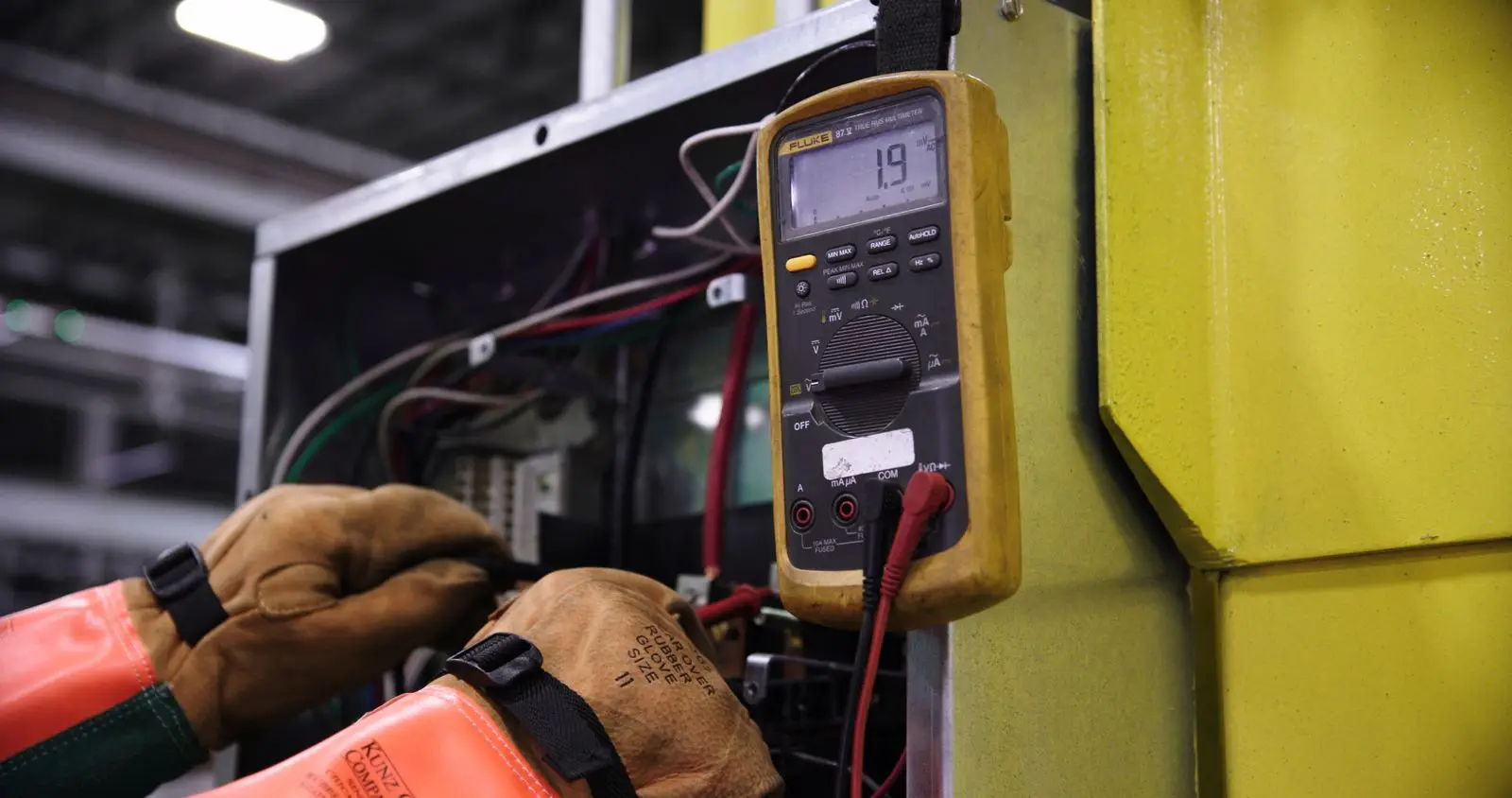
Test at the panel
Voltage and load are measured at the breaker. A breaker that trips under a normal load is tested or swapped; one that trips under a real overload is doing its job.
Work outward
Each device on the circuit is opened and checked. Faults are usually at a connection, and usually at the last working device or the first dead one.
Repair and retest
The failed part is replaced, connections are remade, and the circuit is tested under load before covers go back on.
Can it wait, or is it urgent?
- Act now
Smoke, flames, or a device that is hot and smells of burning
Leave the area, call 911, and do not touch the panel if it is the source.
- Act now
Sparks, scorch marks, a buzzing panel or a breaker that will not stay on
Switch the circuit off if you can do it safely and call an emergency electrician.
- This week
A dead outlet, a nuisance trip or a flickering fixture with no heat or smell
Stop using that circuit for heavy loads and book a repair visit.
- Plan it
Several small faults in an older home
Ask for an electrical inspection so they are assessed together.
What changes the scope of a repair
- Access
- Faults in a finished wall or a tight attic take longer to reach than ones at a device.
- Age of the wiring
- Cloth-insulated cable, aluminum branch wiring and ungrounded circuits limit what can be repaired in place. See house rewiring.
- The panel
- If the panel itself is the cause, the repair becomes a panel replacement question.
- Permits
- Like-for-like device swaps often need no permit, while new circuits usually do. The rule is local; see when a permit is needed.
Repair terms an electrician may use
- Open circuit
- A break in the path, so no current flows. A burned-off wire or a failed connection is an open.
- Short circuit
- Hot touching neutral or ground with almost no resistance between them. The breaker trips instantly.
- Ground fault
- Current leaking to ground through something it should not, such as damp insulation or a metal case.
- Back-stab connection
- A wire pushed into a spring hole on the back of an outlet instead of held under a screw. A common source of loose connections.
What to note before you call about a fault
What stopped working
List the dead outlets, lights or appliances. It tells the electrician which circuit to start on.
When it happens
Constant, only with a certain appliance, or only in wet weather.
What the panel shows
Whether a breaker is tripped, and whether it trips again when reset once.
Age and recent work
The approximate age of the house and any renovation or new appliance in the last few months.
Electrical repair questions
Can I reset a tripped breaker myself?
Yes, once. Push it fully off, then on. If it trips again, leave it off. Repeated resets push current through whatever is wrong.
Why does the fault come and go?
Intermittent faults are usually loose connections that open and close as they heat and cool. They tend to get worse, and they are a common source of heat damage.
Does the electrician need the power off for the whole house?
Usually only the affected circuit. Panel work and service work are the exceptions.
Who does the work?
An independent electrical contractor in your area. Breakerwick connects the call and does not perform electrical work. Ask the contractor for their license number and check it with the state or city that issued it.
What is the most common electrical repair in a home?
Replacing worn outlets and switches and remaking loose connections. Most dead-outlet and flicker calls end there.
How long does an electrical repair visit take?
Simple faults are often found and fixed within an hour or two. Intermittent faults and faults inside walls take longer because they have to be traced.
Do I need a permit for an electrical repair?
Like-for-like repairs usually do not need one. Adding or extending wiring usually does. See the electrical permit guide.
Is it worth repairing old wiring or should it be replaced?
Sound wiring is repaired. Wiring with brittle insulation, no ground or repeated heat damage is a replacement question, covered under house rewiring.
Can a business call for a repair too?
Yes. Say at the start that the building is commercial, since the license class and equipment differ. See commercial electrician.
Talk to an electrician about electrical repair
Call to be connected with an independent electrical contractor near you, or leave your number and one will call back.
(888) 555-0167Call availability varies by area and time of day
Breakerwick is a referral service. Your call or request goes to an independent electrical contractor that sets its own prices and schedule. Ask for the license number, proof of insurance and a written scope before work starts. How this works
Request a callback
Leave a number and an electrical contractor in your area will call you.