
Smoke, flames, someone shocked or a power line down? Call 911 first and stay at least 35 feet from any downed wire.
Urgent electrical problem
Outlet sparking when I plug something in
A brief, small blue spark as a plug goes in is the current jumping the last hair of a gap, and it is normal with appliances that are switched on. A spark that is large, yellow or white, lasts, makes noise, leaves a mark or comes with a smell means the outlet has a fault.
Call availability varies by area and time of day. Calls are routed to an independent electrical contractor. Reviewed .
Normal spark or a fault
Usually normal
- Small and blue
- Lasts a split second, only as the plug goes in
- Happens with an appliance that is switched on or has a power supply that charges on connection
- No mark, smell or sound afterward
A fault
- Large, yellow or white, or more than one spark
- Sparks while the plug is sitting still, or when you touch the cord
- Crackling, popping or sizzling
- Black or brown marks, a melted plug or a burning smell
- The outlet is warm or the plug fits loosely
What to do about a sparking outlet
Stop using the outlet
Do not test it again with something else.
Switch off the breaker
If there was a mark, noise, smell or heat, turn the circuit off.
Unplug once it is off
Check the plug's prongs. Pitting or melting on the plug means the appliance cord needs replacing too.
Fire or smoke
Leave and call 911. Never use water on an electrical fire.
Have the outlet replaced
What causes a sparking outlet
- Worn contacts
- The springs inside lose their grip with age. A loose plug arcs as it shifts.
- Loose wiring behind the outlet
- Push-in back connections are the usual culprit. They loosen with heating and cooling.
- Short circuit
- Hot touching neutral or ground inside the box, often after a device was replaced or a screw driven through cable.
- Moisture
- In kitchens, bathrooms and outdoors. These outlets should have GFCI protection; see GFCI outlets.
- Overloading
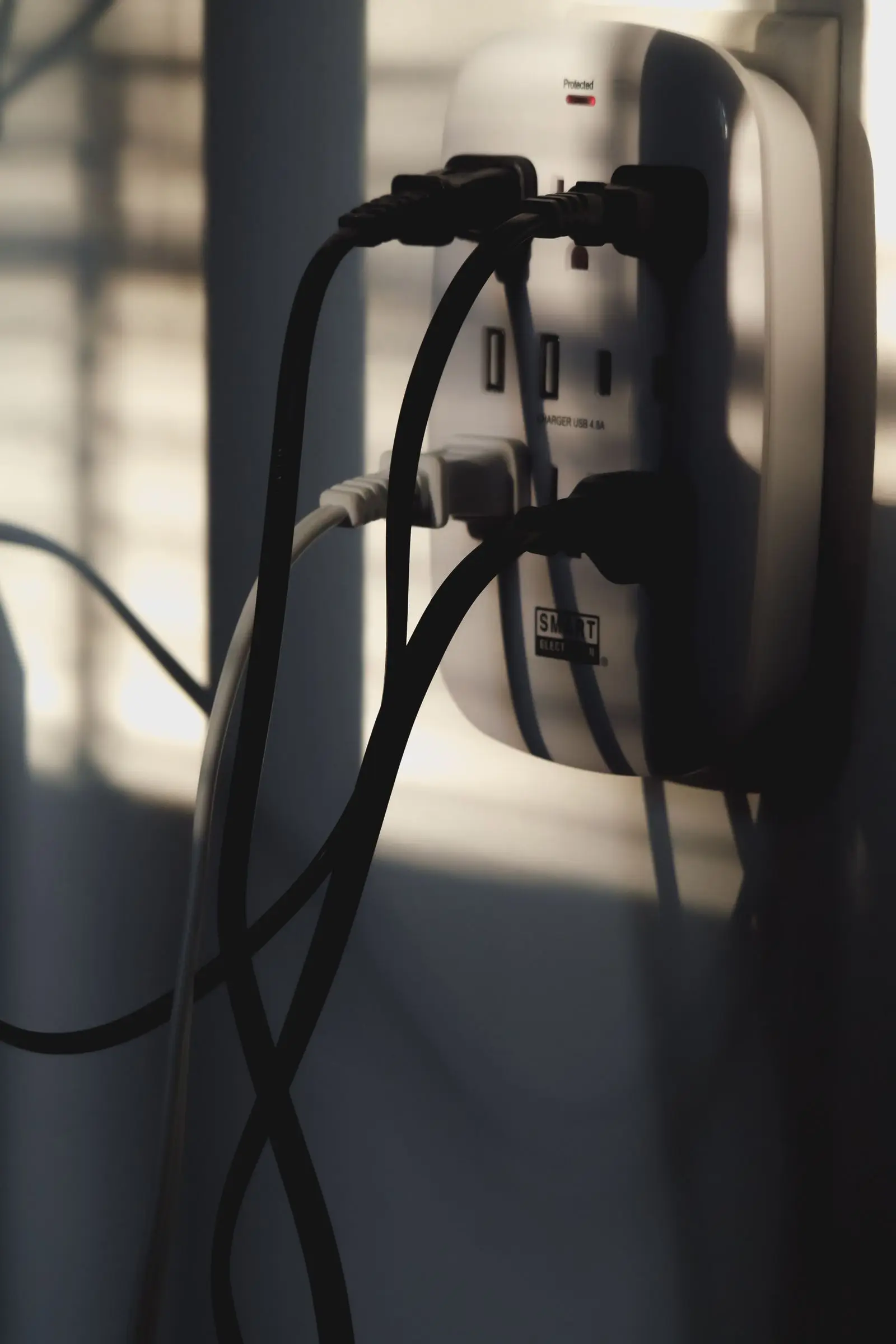
- Multi-way adapters and power strips pulling more current than the outlet's contacts are built for.
- Damaged plug or cord
- Bent prongs make poor contact and arc inside the outlet.
Why arcing matters
An arc is electricity crossing a gap through air, and it is extremely hot at the point where it occurs. A loose connection that arcs each time a load starts slowly chars the plastic around it. Charred plastic conducts a little, which makes the next arc easier. This is how an outlet that has sparked for months becomes the origin of a fire.
Arc-fault circuit interrupters were developed to catch this. They are required on most living-area circuits in homes wired under recent codes, and can be added to many existing panels as replacement breakers.
Sparking outlet questions
Can I still use the other half of the outlet?
No. Both halves share the same connections behind the face.
It sparked once and seems fine. Should I worry?
If it was a small blue spark with no mark or smell, probably not. If you are unsure, look at the outlet face and the plug prongs for discoloration.
Why does unplugging something make a spark?
Breaking a circuit under load draws a small arc. Switch appliances off before unplugging them to avoid it.
This page is general safety information, not a diagnosis. Electrical faults can cause fire and electric shock. If you are unsure whether something is safe, switch it off and have a licensed electrician inspect it.
Want it checked today?
Call to be connected with an independent electrical contractor in your area, or leave your number for a callback.
(888) 555-0167Call availability varies by area and time of day
Breakerwick is a referral service. Your call or request goes to an independent electrical contractor that sets its own prices and schedule. Ask for the license number, proof of insurance and a written scope before work starts. How this works
Request a callback
Leave a number and an electrical contractor in your area will call you.