
Safety guide
Electrical safety after a storm or flood
Updated · Breakerwick editorial
Short answer
After a storm, treat every downed or sagging wire as live and stay at least 35 feet away. After a flood, do not enter a room where water has reached outlets or the panel until power has been cut at the meter. Equipment that was underwater is replaced, not dried out.
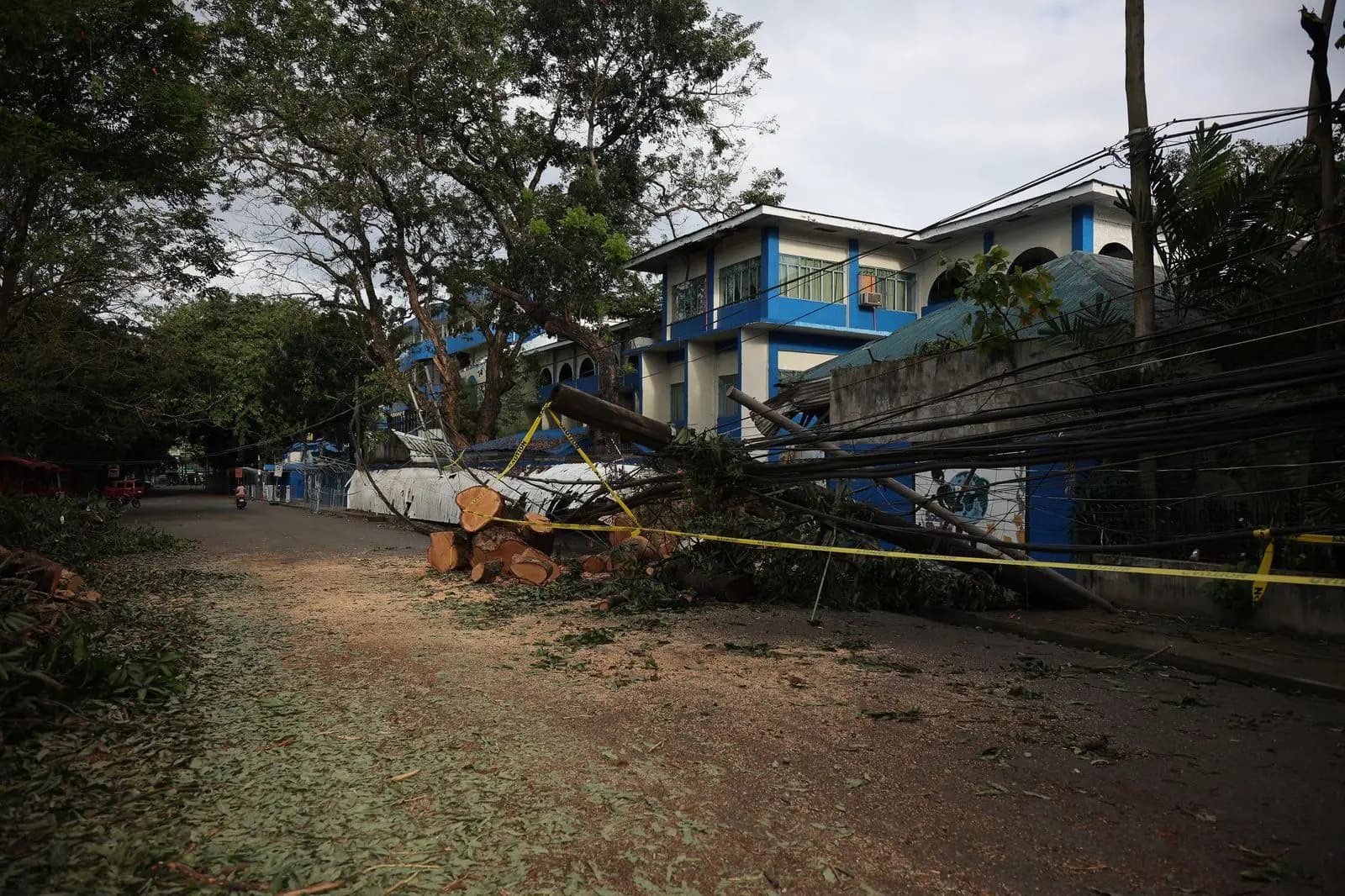
The first hour
- Act now
A wire is down, on the ground, a fence, a vehicle or in water
Stay at least 35 feet away, keep others back and call 911 and the utility.
- Act now
You are in a vehicle that a line has fallen on
Stay inside and call 911. Leave only if there is fire: jump clear with feet together and shuffle away.
- Act now
Water is rising toward outlets or the panel
If you can reach the main breaker without standing in water, switch it off. If not, leave and call the utility.
- Act now
The service mast or meter has been pulled off the wall
Keep away. Call the utility to disconnect, then an electrician.
- This week
Power is out and nothing is damaged
Switch off large appliances, leave one light on to show when power returns, and report the outage.
What floodwater does to electrical equipment
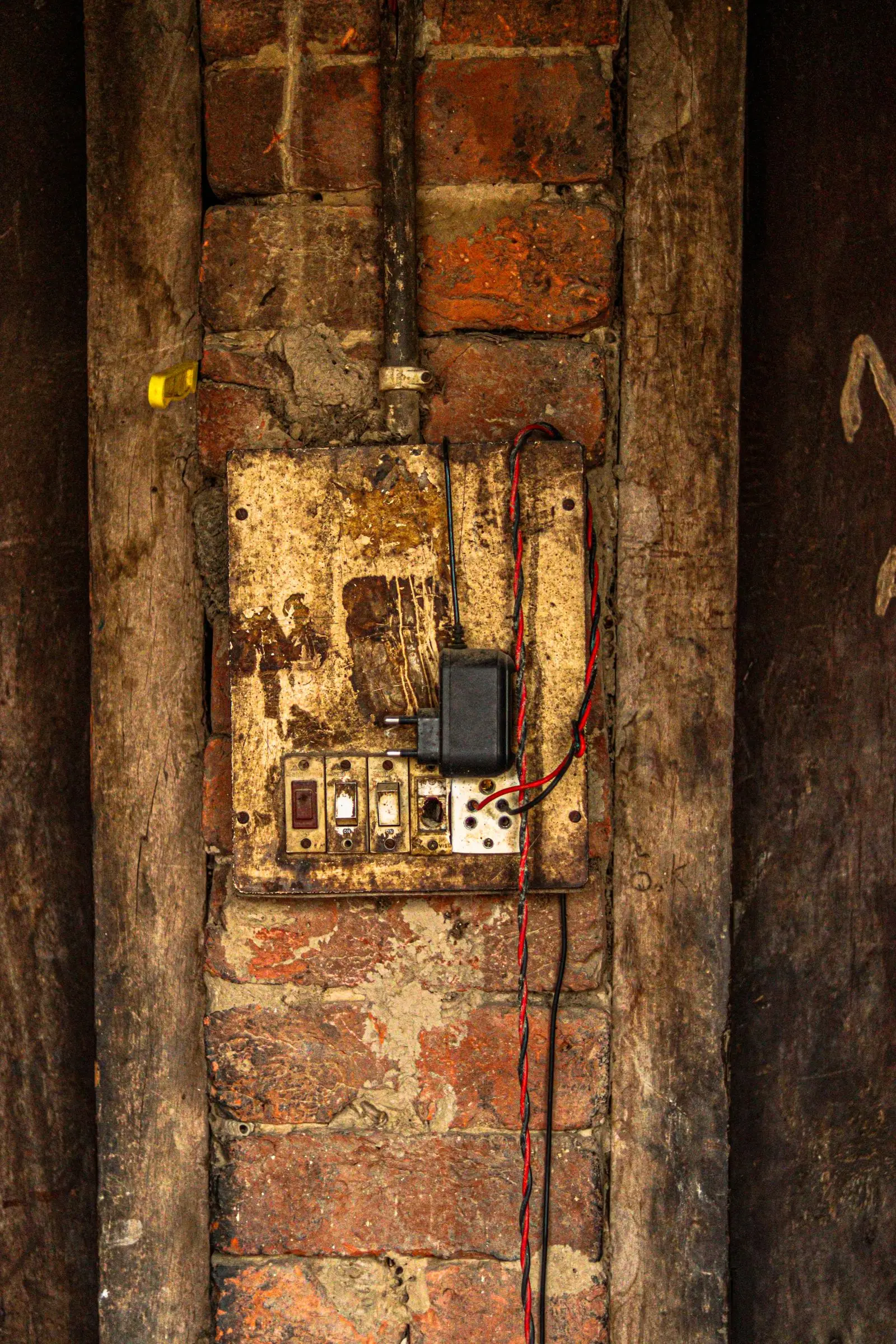
Floodwater carries silt, salt, fuel and sewage. It leaves deposits inside breakers, outlets, switches and motors that stay conductive and corrosive after the surface is dry. A breaker that has been submerged may never trip again, and there is no reliable way to tell from outside.
Industry guidance from electrical equipment manufacturers is that breakers, fuses, panels, outlets, switches, GFCIs and most cable that has been submerged should be replaced. A few items, such as some conduit and large switchgear, may be reconditioned by qualified people. For a house, plan on replacing every electrical item that was below the waterline.
Most jurisdictions require a permit and inspection before a flooded building is reconnected. The utility will normally wait for the inspector's approval.
Who restores which part
- Utility
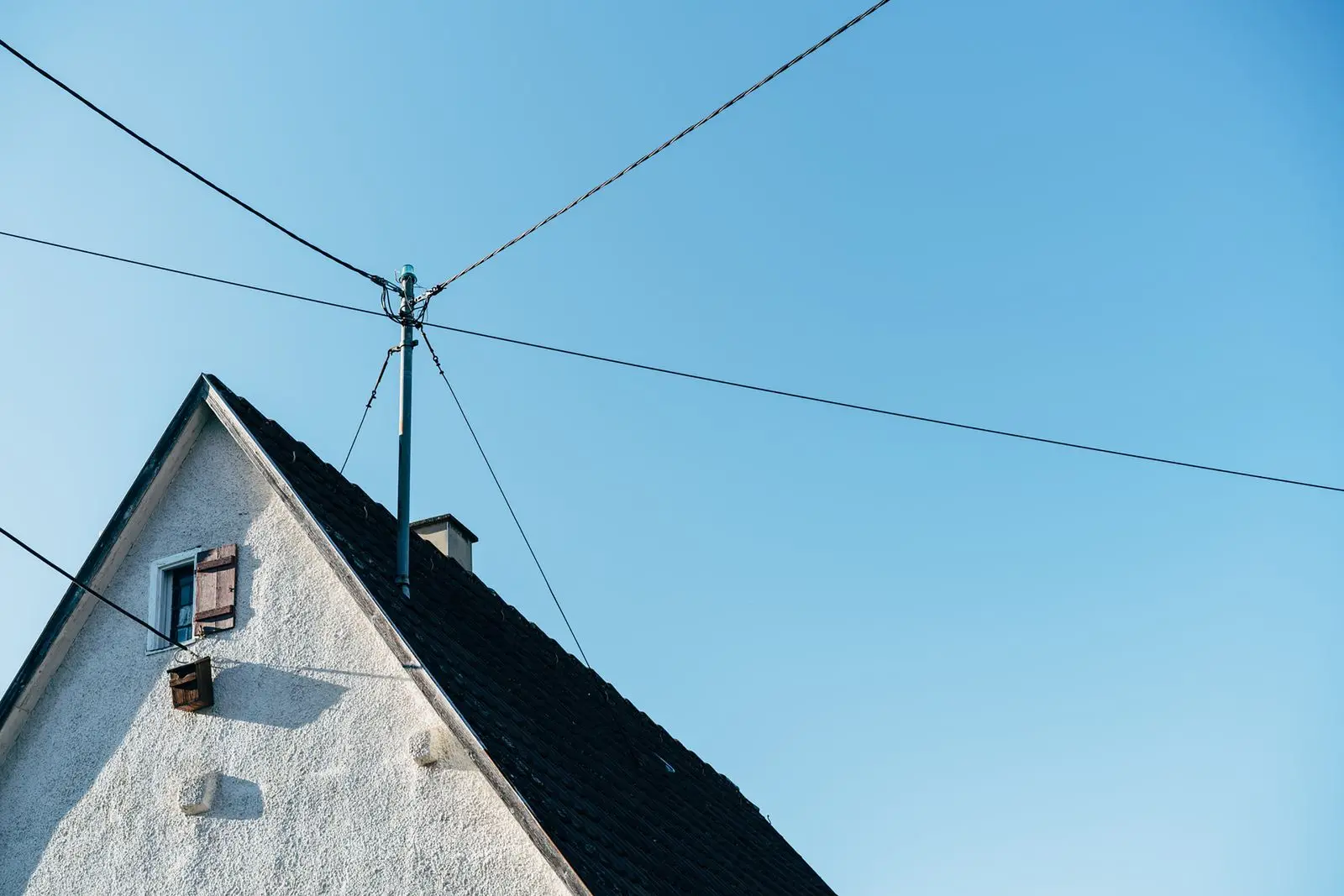
- Poles, transformers, the line to your house and the meter.
- Electrician
- The mast and weatherhead, service cable, the meter socket in many areas, the panel and all house wiring.
- Inspector
- Approves the repair before the utility reconnects.
- Tree service
- Clears limbs from the house side once the utility has made the line safe. Tree crews do not work near energized lines unless specially qualified.
- Insurer
- Photograph damage before repairs and keep the damaged parts if asked.
Portable generator rules
Carbon monoxide from generators kills people after nearly every major outage.
Outdoors only, 20 feet from the house
With the exhaust pointing away from doors, windows and vents. Never in a garage, basement or porch.
Never backfeed
Do not connect a generator to a wall outlet or directly to the panel. Use a transfer switch or interlock, or run appliances from extension cords rated for the load.
Dry hands, dry ground
Keep the generator out of rain under an open canopy made for the purpose.
Cool before refueling
Fuel spilled on a hot engine ignites.
Working CO alarms
Battery-powered, on every level.
When the power comes back
Watch the lights
If some are very bright and others dim, switch off the main and call the utility. See partial power outage.
Bring loads back gradually
Start with refrigeration and heating or cooling, then the rest.
Check GFCIs and breakers
Reset any that tripped. One that will not reset is reporting a fault.
Look and smell
Any burning smell, buzzing or warm outlet after restoration needs a visit. See emergency electrician.
Sources for this safety guidance
The guidance on this page follows published public-safety advice from the agencies below. Follow instructions from local emergency officials and your utility where they differ.
This guide is general information, not professional, legal or insurance advice. Electrical codes, permit rules and prices vary by location. Have a licensed electrician assess your installation, and confirm requirements with your local permit office.
Want a licensed electrician to look at it?
Call to be connected with an independent electrical contractor in your area, or leave your number for a callback.
(888) 555-0167Call availability varies by area and time of day
Breakerwick is a referral service. Your call or request goes to an independent electrical contractor that sets its own prices and schedule. Ask for the license number, proof of insurance and a written scope before work starts. How this works
Request a callback
Leave a number and an electrical contractor in your area will call you.