
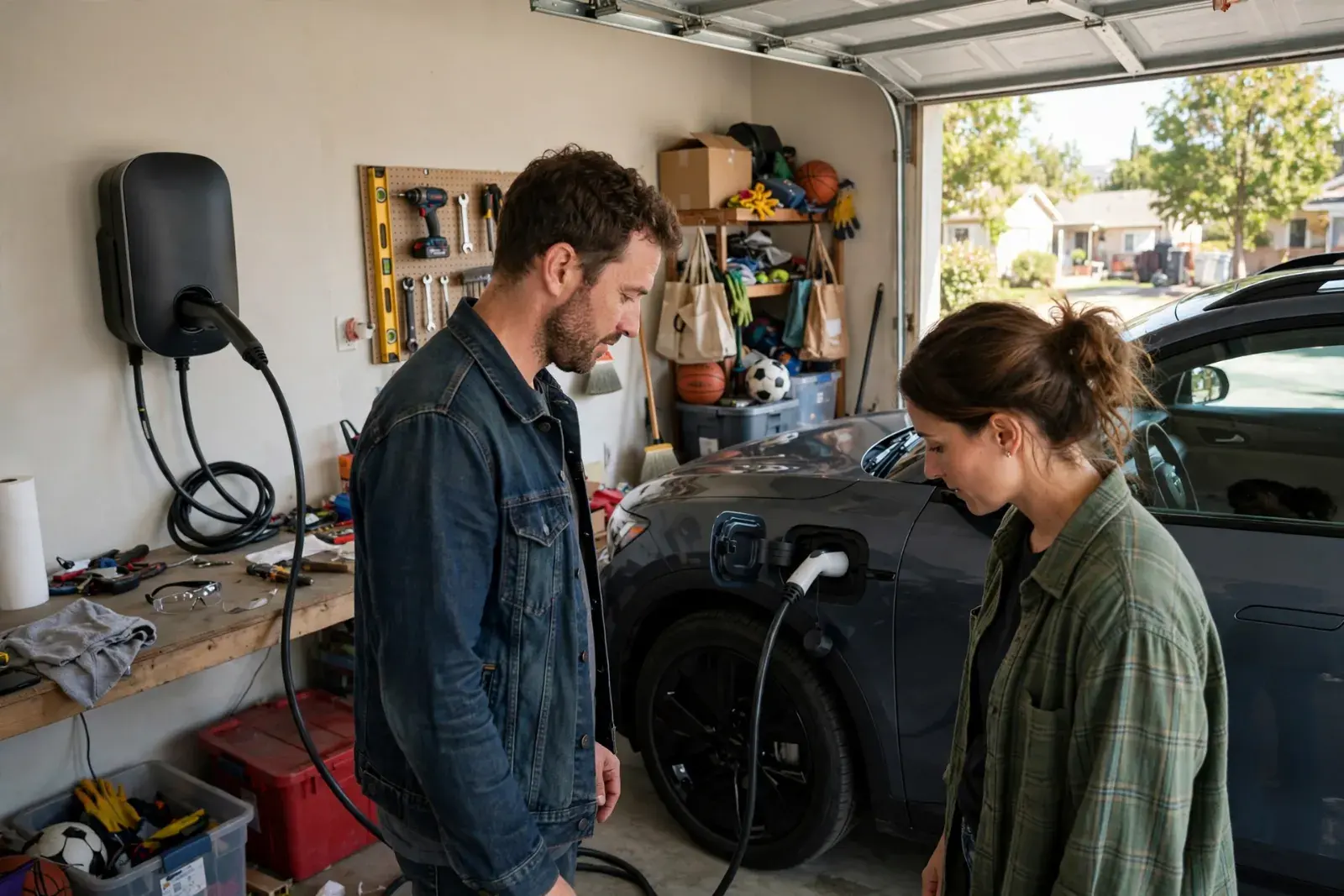
Electric vehicle charging
EV charger installation
A Level 2 home charger is a 240-volt circuit, usually between 30 and 60 amps, ending in a wall unit or an outlet. Whether your house can take one depends on a load calculation, not on how many empty breaker slots the panel has.
Call availability varies by area and time of day. Calls are routed to an independent electrical contractor. Reviewed .
Charging levels and circuit sizes
Charging speed depends on the car's onboard charger as well as the circuit. Range added per hour is approximate.
| Setup | Circuit | Charger output | Range added per hour |
|---|---|---|---|
| Level 1, standard outlet | 120 V, 15 or 20 A | 12 to 16 A | About 3 to 5 miles |
| Level 2, small | 240 V, 30 A | 24 A | About 15 to 20 miles |
| Level 2, common | 240 V, 40 or 50 A | 32 or 40 A | About 25 to 35 miles |
| Level 2, large | 240 V, 60 A, hardwired | 48 A | About 35 to 45 miles |
EV charging is a continuous load, so the charger's output is limited to 80 percent of the circuit rating.
Can my panel take a charger?
An electrician answers this with a load calculation that totals the house's existing loads by the method in the electrical code. Many 200-amp homes have room for a 40 or 50-amp charging circuit. Many 100-amp homes do not, without one of the workarounds below.
- A smaller circuit
- A 20 or 30-amp Level 2 circuit still replaces a typical day's driving overnight and fits where a 50-amp circuit will not.
- Load management
- Listed energy management devices monitor the house load and pause or slow charging when the service nears its limit. Some chargers have this built in.
- Circuit sharing
- A listed switching device lets the charger share a dryer or range circuit so both never run together.
- Service upgrade
- When none of these fit, the service is upgraded. See panel upgrades.
Hardwired or plug-in
Hardwired charger
- Required for 48-amp charging
- No receptacle to wear or overheat
- Preferred outdoors
- The unit stays with the house unless disconnected by an electrician
Plug-in on a 240-volt outlet
- Usually a NEMA 14-50 or 6-50 outlet, limited to 40 amps of charging on a 50-amp circuit
- The receptacle must be a heavy-duty grade made for sustained load; economy range outlets have a record of overheating under EV charging
- Recent code editions require GFCI protection for the outlet, which can conflict with the charger's own protection and cause nuisance trips
- The charger can be unplugged and taken with you
For a permanent home installation most electricians and charger makers now favor hardwiring.
How a charger installation runs
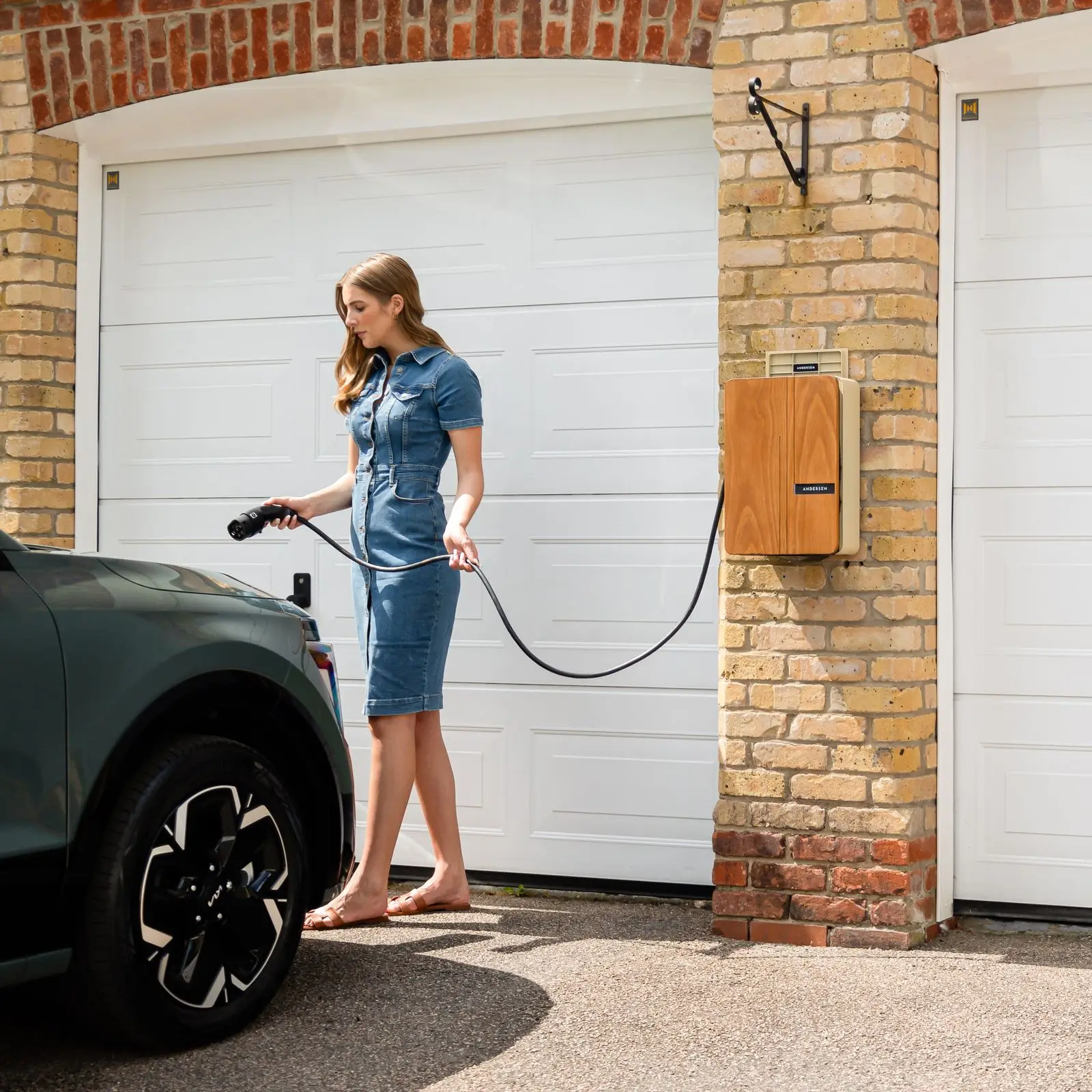
Site check
Where the car parks, where the charge port is, the distance to the panel and the route the cable can take.
Load calculation
Decides the circuit size or the need for load management.
Permit and utility notice
Most jurisdictions require a permit for a charging circuit. Some utilities ask to be told, and some offer a rebate or an EV rate that requires an application first.
Install
Breaker, cable or conduit, and the charger or outlet, mounted at a height and position that keeps the cord off the ground.
Commission and inspect
The charger's current limit is set to match the circuit, the car is test-charged and the inspection is passed.
What changes the scope of a charger job
Published price ranges are in the EV charger installation cost guide.
- Distance from the panel
- The largest single factor. A charger on the other side of the panel wall is a short job; one across a finished basement or in a detached garage is not.
- Detached garages
- May need trenching and a feeder with its own disconnect. See subpanels.
- Panel capacity
- A full or undersized panel adds a subpanel, load management or a service upgrade.
- Outdoor mounting
- Needs a weather-rated unit and wiring method.
- Condos and rentals
- Shared electrical rooms, assigned parking and owner or association approval add steps. Several states have right-to-charge laws that limit an association's ability to refuse.
EV charging terms explained
- EVSE
- Electric vehicle supply equipment: the wall unit most people call the charger. The actual charger is inside the car.
- Onboard charger
- The car's own converter. Its rating caps how fast the car can take power from a Level 2 circuit.
- NEMA 14-50
- A 50-amp, 240-volt outlet pattern commonly used for plug-in charging.
- Load management
- A listed device or charger feature that slows or pauses charging when the house is near its service limit.
What to check before an EV charger quote
Your car's maximum AC charging rate
Listed in the manual in kilowatts or amps. There is no benefit in a circuit larger than the car can use.
Where the car parks and where its port is
It sets the charger position and cord length.
A photo of the panel
Door open, showing the main breaker size and free spaces.
Utility programs
Whether your utility offers an EV rate or rebate, and whether it must approve first.
EV charger questions
Do I need a 60-amp circuit?
Rarely. A 32-amp charger on a 40-amp circuit recovers well over 200 miles overnight. A larger circuit mainly helps households with long daily mileage or two EVs.
Can I use my dryer outlet?
Not by swapping plugs back and forth by hand as a routine, and never with an adapter that defeats the plug's rating. A listed circuit-sharing device is the proper way to share that circuit.
Is a permit really needed?
In most places, yes. It is also what an insurer will ask about if the circuit is ever involved in a claim.
Does any electrician install chargers?
Any licensed electrical contractor can run the circuit. Some rebate programs require an installer with specific training or program enrollment, so check the program rules first.
What is the difference between Level 1 and Level 2 charging?
Level 1 uses a standard 120-volt outlet and adds a few miles of range per hour. Level 2 uses a 240-volt circuit and is several times faster.
How long does a Level 2 charger take to install?
A charger near the panel with spare capacity is often installed in a few hours. Long cable runs, trenching or panel work extend it.
Can an EV charger be installed outside?
Yes, with a unit and wiring method rated for outdoor use. Hardwiring is preferred outdoors.
Will charging an EV overload my house?
Not if the circuit was sized by a load calculation. Where the service is near its limit, load management keeps the total within it.
What does it cost, and does it differ by city?
See the EV charger installation cost guide. For a city with its own utility and permit office, see EV chargers in Los Angeles.
Talk to an electrician about EV charger installation
Call to be connected with an independent electrical contractor near you, or leave your number and one will call back.
(888) 555-0167Call availability varies by area and time of day
Breakerwick is a referral service. Your call or request goes to an independent electrical contractor that sets its own prices and schedule. Ask for the license number, proof of insurance and a written scope before work starts. How this works
Request a callback
Leave a number and an electrical contractor in your area will call you.