
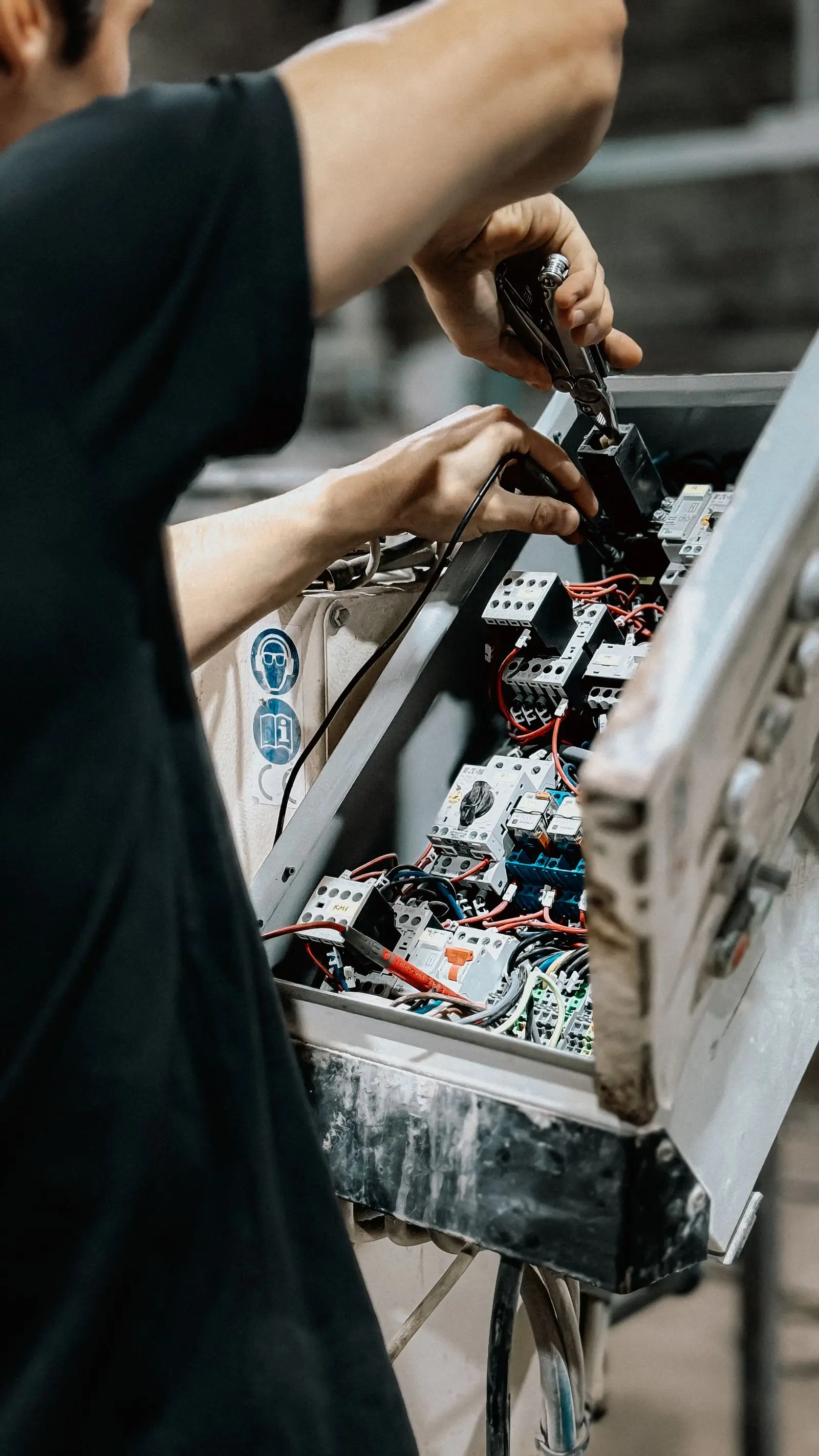
Shops, offices and light industrial
Commercial electrician
Commercial electrical work uses different equipment, different code sections and often a different license class from house wiring. Ask early whether the contractor holds the commercial classification your state or city requires.
Call availability varies by area and time of day. Calls are routed to an independent electrical contractor. Reviewed .
How commercial work differs from residential
Residential
- Single-phase 120/240-volt service
- Non-metallic cable in wood framing in most regions
- One owner decides
- Work is scheduled around the household
Commercial
- Often three-phase service at 120/208 or 277/480 volts
- Wiring in conduit or metal-clad cable
- Landlord, tenant and sometimes a general contractor each approve part of the work
- Work is scheduled around trading hours, with shutdowns planned in advance
Work commonly requested
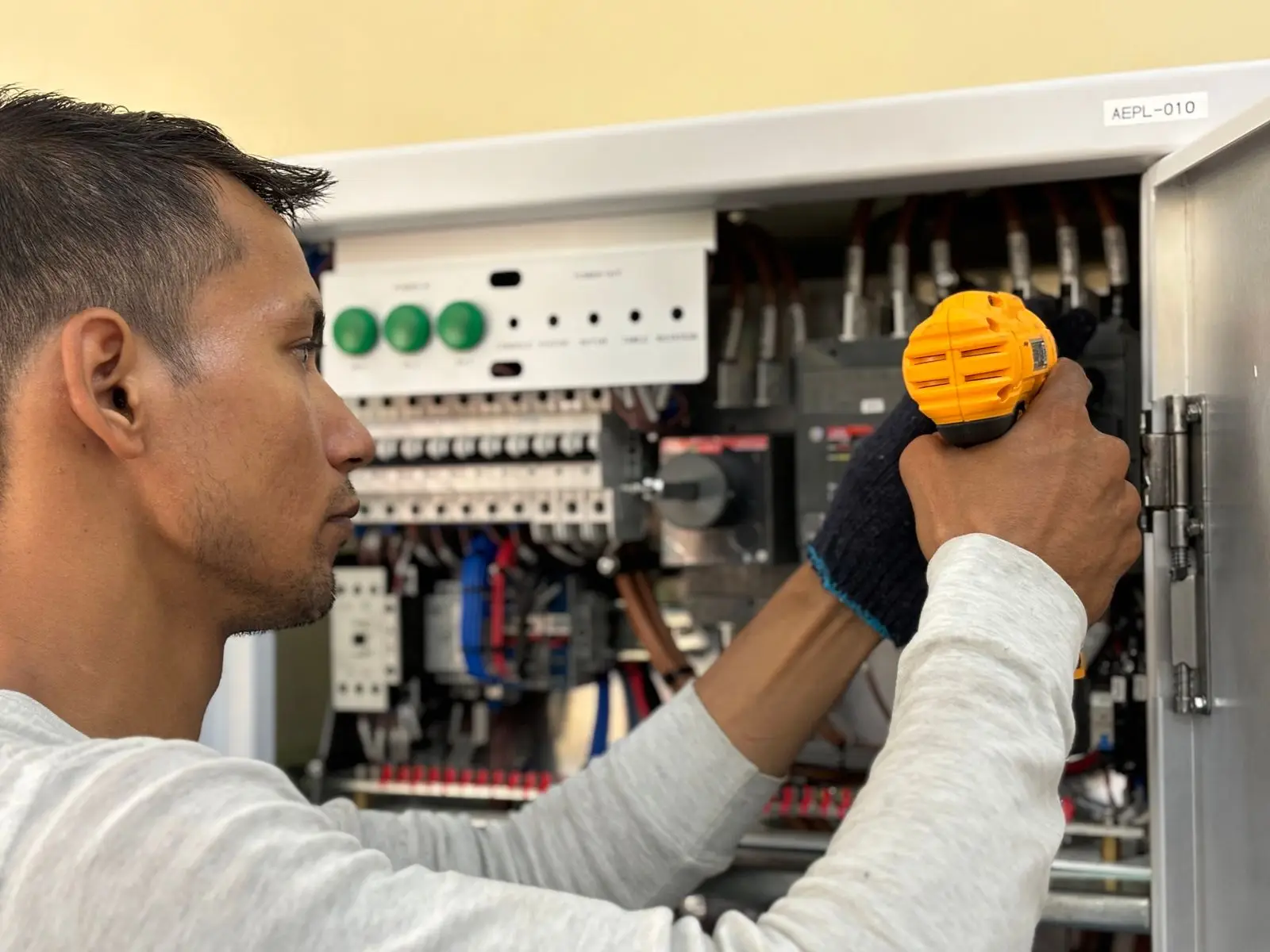
- Service calls
- Tripping breakers, dead circuits, failed lighting, and equipment that will not start.
- Tenant improvements
- New circuits, outlets, data pathways and lighting layouts when a space changes hands or use.
- Lighting
- LED retrofits, exit and emergency lighting, parking lot and sign circuits.
- Panels and distribution
- New panels, subpanels, transformers and dedicated circuits for kitchen, medical or shop equipment.
- Compliance repairs
- Items written up by a fire marshal, insurer or building inspector.
Licensing and permits on commercial jobs
Many states issue separate residential and commercial classifications, or limit some licenses by voltage or project size. A contractor licensed for houses may not be allowed to work in your building. The license record published by the issuing board shows the classification; the state guides name the board for each state.
Commercial permits usually need more than a residential one: a load calculation, a panel schedule and sometimes stamped drawings. Fire alarm and low-voltage systems are frequently licensed and permitted separately from power wiring.
If you lease the space, read the lease before you call. Many leases require landlord approval, proof of the contractor's insurance and use of the building's own fire alarm vendor.
What to have ready before you call
The building details
Address, type of business, and whether you own or lease.
The equipment nameplate
For new equipment, a photo of the nameplate showing voltage, phase and amps tells the contractor what circuit it needs.
Panel photos
A photo of the panel with the door open and its schedule helps establish whether there is spare capacity.
Access and hours
When the power can be shut down, and who holds keys to the electrical room.
What drives the scope
- Spare capacity
- Adding load to a full panel or an undersized service means distribution work before the new circuits.
- Wiring method
- Conduit runs through finished ceilings and fire-rated walls take longer than open-ceiling work.
- Out-of-hours work
- Shutdowns scheduled at night or on weekends cost more than daytime work.
- Drawings and inspections
- Engineered plans and multiple inspections add time before energizing.
Commercial terms explained
- Three-phase
- A supply with three alternating currents, used to run larger motors and equipment efficiently.
- Panel schedule
- The list inside a panel door showing what each breaker feeds. Permit offices often ask for it.
- Tenant improvement
- Work to fit out a leased space for a new occupant or use.
- Conduit
- Metal or plastic pipe that carries and protects conductors. Standard in commercial buildings.
Paperwork that speeds up a commercial job
The lease clauses on alterations
Who must approve the work and what insurance the contractor must show.
Existing drawings
Any electrical plans or a one-line diagram of the building.
Equipment cut sheets
Manufacturer data for anything new being connected.
The landlord's contractor rules
Some buildings limit who may work on shared systems such as fire alarm.
Commercial electrical questions
Do I need three-phase power?
Only if your equipment does. The nameplate on motors, compressors and commercial kitchen equipment states the phase and voltage required.
Who pulls the permit?
The electrical contractor, in nearly all commercial work. Be cautious of any request for the business owner to pull it instead.
Can the work be done without closing?
Often, by working in sections and scheduling the shutdown outside trading hours. Some service and panel work needs a full outage.
Does Breakerwick handle commercial requests?
Calls are connected to independent electrical contractors. Tell the contractor at the start that the job is commercial so the right license class and crew are assigned.
Does a commercial electrician need a different license?
In many states, yes. Licenses are often split into residential and commercial or unlimited classes. The issuing board's lookup shows the classification.
How long does a tenant build-out take electrically?
It depends on the size of the space, the permit review and inspections. Rough-in and final inspection dates usually set the schedule more than the wiring itself.
Who is responsible for electrical repairs in a leased space?
The lease decides. Commonly the tenant maintains wiring inside the space and the landlord maintains the service and shared equipment.
Can lighting be upgraded to LED without rewiring?
Often. Many fixtures take LED retrofit kits or replacement lamps, though emergency and exit lighting have their own requirements. See lighting installation.
What is an electrical load study?
A measurement or calculation of how much power a building draws, used to decide whether new equipment can be added to the existing service.
Talk to an electrician about commercial electrician
Call to be connected with an independent electrical contractor near you, or leave your number and one will call back.
(888) 555-0167Call availability varies by area and time of day
Breakerwick is a referral service. Your call or request goes to an independent electrical contractor that sets its own prices and schedule. Ask for the license number, proof of insurance and a written scope before work starts. How this works
Request a callback
Leave a number and an electrical contractor in your area will call you.